Showing posts with label japan. Show all posts

The Demon's Sermon on the Martial Arts Review

The Demon's Sermon on the Martial Arts
Average Reviews:

(More customer reviews)
Books on Bushido and swordsmanship are a vast part of my collection, things ranging from the common Sun Tzu, Musashi's 5 Rings, to the lesser known Shogun No Rin, Takeda and the Hagakure and other books are frequent reads for me. This book is interesating in that it deviats from the practical aphorisms and "text book" nature of the others and adopts a 2 part structure. The first section is a collection of stories based on animals and insects that explain the workings of Ch'i flow and the essence of the "void mind" and similar concepts. it does this ina way similar to the Zen Flesh Sen Bones koan/story method, though these have a warmer feel to them. The second part of the book is the actual sermon as overgeard by a traveling man who happend upon some demons on a mountain. Now Demon in the Japanese context does not have the same menaing as it does in the west. So this isnt some horned pitchfork carrying guy talking in the woods. Instead it a gathering of Demons holding a question and answer session with a masterful demon on he subject of the nature of mind in combat as tied to sword play. The meat of the discussions is similar to those of most books but it focuses alot on Ch'i energy and how it is used/abused/neglected, something that most other books leave out entirely. I have little knowlage of Ch'i myself in this context, but found it a good opener for the subject and it did whet the appitite for more. Though there are better books on Bushido out there for the moral practitioner this one leands intself well to a collection as it delves into a different spirituality than most as the others spend alot of time on strict Zen principles. Of course this is xrooted in Zen and Buddhism as well, but it contains a strong influence from the Taoist schools as well, a healthy dosage to say the least as outlined in the first few pages. A good read.

Click Here to see more reviews about: The Demon's Sermon on the Martial Arts

The Demon said to the swordsman, "Fundamentally, man's mind is not without good. It is simply that from the moment he has life, he is always being brought up with perversity. Thus, having no idea that he has gotten used to being soaked in it, he harms his self-nature and falls into evil. Human desire is the root of this perversity."Woven deeply into the martial traditions and folklore of Japan, the fearsome Tengu dwell in the country's mountain forest. Mythical half-man, half-bird creatures with long noses, Tengu have always inspired dread and awe, inhabiting a liminal world between the human and the demonic, and guarding the most hidden secrets of swordsmanship. In The Demon's Sermon on the Martial Arts, a translation of the 18th-century samurai classic by Issai Chozanshi, an anonymous swordsman journeys to the heart of Mt. Kurama, the traditional domain of these formidable beings. There he encounters a host of demon; through a series of discussions and often playful discourse, they reveal to him the very deepest principles of the martial arts, and show how the secrets of sword fighting impart the truths of life itself.The Demon's Sermon opens with The discourses, a collection of whimsical fables concerned with the theme of transformation-for Chozanshi a core phenomenon to the martial artist. Though ostensibly light and fanciful, these stories offer the attentive reader ideas that subvert perceived notions of conflict and the individual's relationship to the outside world. In the main body of work, The Sermon, Chozanshi demonstrates how transformation is fostered and nurtured through ch'i - the vital and fundamental energy that flows through all things, animate and inanimate, and the very bedrock of Chozanshi's themes and the martial arts themselves. This he does using the voice of the Tengu, and the reader is invited to eavesdrop with the swordsman on the demon's revelations of the deepest truths concerning ch'i, the principles of yin and yang, and how these forces shape our existence. In The Dispatch, the themes are brought to an elegant conclusion using the parable of an old and toothless cat who, like the demon, has mastered the art of acting by relying on nothing, and in so doing can defeat even the wiliest and most vicious of rats despite his advanced years.This is the first direct translation from the original text into English by William Scott Wilson, the renowned translator of Hagakure and The Book of Five Rings. It captures the tone and essence of this classic while still making it accessible and meaningful to today's reader. Chozanshi's deep understanding of Taoism, Buddhism, Confucianism, and Shinto, as well as his insight into the central role of ch'i in the universe, are all given thoughtful treatment in Wilson's introduction and extensive endnotes. A provocative book for the general reader, The Demon's Sermon will also prove an invaluable addition to the libraries of all those interested in the fundamental principles of the martial arts, and how those principles relate to our existence.

Buy Now

Click here for more information about The Demon's Sermon on the Martial Arts

Read More...

Masks Review

Masks
Average Reviews:

(More customer reviews)
I first studied this writer in college (with her book, The Waiting Years). I expected Masks to be similar, but it was extremely different. It is more modern and twisted. The story revolves around two women, one older and one younger (the younger is the widowed wife of the older woman's son). However, their relationship is not straight-forward; they have a psychic, almost sexual, connection. They use this connection to play with the hearts of the men around them. I found the descriptions in this book particularly striking; there is a party scene with the release of fireflies that I can still very clearly visualize. It was extremely enjoyable to delve into the dark depths of the two women. Just like in the story, the men are inconsequential. This is a great read for those who prefer things a bit uneasy and weird.

Click Here to see more reviews about: Masks


Buy Now

Click here for more information about Masks

Read More...

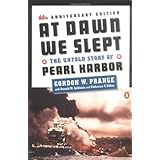
At Dawn We Slept: The Untold Story of Pearl Harbor Review

At Dawn We Slept: The Untold Story of Pearl Harbor
Average Reviews:

(More customer reviews)
While science is my area of expertise, I have a continuing interest in history. That interest lead me to pick up Prange's book. Gordon Prange has devoted years to accumulating information about the Japanese attack on Pearl Harbor. That information includes interviews and military and government information from the USA and Japan. That accumulated information was then boiled down into this final work -- completed after Prange's death.
While there have been many books and theories proposed about why and how the debacle at Pearl Harbor took place, Prange's approach is well documented, and includes details of the pre-attack politics of the USA and of Japan. His book also includes detailed information about the attack itself, gleaned from interviews with those on both sides who actually participated in the event. But, even with that level of detail, I must admit that the most compelling part of the book for me is the section that follows the actual attack -- when the US government and the military were trying to figure out what actually happened, and who was to blame.
The final series of chapters of the book provide insight into the thoughts and tactics of Adm. Kimmell (CincPAC) and Gen Short (Commanding General of army at Hawaii), the two primary "interested parties" in the event.
Before reading the book, I had a tendency to believe that there may have been something of a conspiracy by the Roosevelt administration to get us into WWII, but after reading this account of Pearl Harbor, I am more likely to believe that the great success, including complete surprise by Japanese naval aviation was the result of a series of ill-advised decisions by the commanders at Hawaii rather than by any entity in Wash DC.
The sticky point in the whole affair was "magic" the US's code-breaking machine that allowed us to monitor coded diplomatic messages sent between Tokyo and some of its embassies. While "magic" was the source of a great deal of information that may have resulted in a different outcome at Pearl Harbor if the commanders there had access to it, we will never really know.
If you are interested in looking in repurcussions from the attack at Pearl Harbor, or if you have an interest in thinking about the whys and hows of the US entry into WWII, I urge you to read this book.
The writing is passable, though sometimes quite dry. The information is well documented, and is believable. This is not, however, a quick read -- there is a lot of meat in this book to be digested as you go along.
All in all an outstanding contribution to the telling of a sensitive piece of American history.
5 stars for content and believability.
Alan Holyoak

Click Here to see more reviews about: At Dawn We Slept: The Untold Story of Pearl Harbor


Buy Now

Click here for more information about At Dawn We Slept: The Untold Story of Pearl Harbor

Read More...

A Dictionary of Basic Japanese Grammar Review

A Dictionary of Basic Japanese Grammar
Average Reviews:

(More customer reviews)
There is a bit of a myth about Japanese grammar--that it is too complicated, too alien for the non-native speaker to ever really master. This is a myth that many Japanese perpetuate themselves, seen in unflattering characterizations of non-native speakers, or in the (unhelpful) praise lavished upon anyone who can speak Japanese to any degree, no matter how ungrammatical it may be. This is a myth that is also unfortunately and unintentionally perpetuated by guides like Jorden's "Japanese the Spoken Language" that do the learner a disservice by explaining grammatical points in a language better suited for a linguist than a language learner. For people like you and me, who want to surpass these low expectations and confusing explanations and start on the road to true fluency, "A Dictionary of Basic Japanese Grammar" is an essential companion.
Let's face it--from the perspective of a native English speaker, mastering Japanese grammar is difficult. Very difficult. Don't trust anyone who says otherwise! Much is made of the difficult writing system, but mastering grammar is perhaps even more difficult and essential to smooth communication. Sure, learning the difference between "wa" and "ga" is not as sexy as learning how to write "love" or "raccoon dog" in kanji, but it's many times more useful on a daily basis. By providing easy-to-understand explanations as well as examples of both good and bad usage, the student is given a better understanding of basic (but still difficult-to-master) grammatical points. This dictionary does an especially good job of contrasting similar constructs that give beginning-to-intermediate (and even many advanced) students trouble (wa/ga, aida/uchi, ageru/kureru, hazu/beki, ni/de etc.)
Although I don't think it's possible to gain complete comfort and mastery of Japanese without living in Japan, or at the very least, interacting with Japanese people on a regular basis, this book is the perfect guide for explaining the nuances that a beginner might not notice, and an intermediate student might be aware of but not fully understand. This includes the deceptive "similar constructs" I mentioned before, words that are not easy to translate into English (sekkaku, darou come to mind), and other issues such as auxiliary verbs and onomatopoetic "sound words". Whether you're learning Japanese in school, living abroad in Japan, or even just studying on your own, "A Dictionary of Basic Japanese Grammar" is an indispensable companion for your studies.
One last comment--there are a few reviews that have comments along the lines of "yes, but the Japanese don't really talk like this" to which I say, "You're missing the point." That's a bit like arguing against learning multiplication tables because in the "real world" there are calculators. Sure it would be nice to go directly from "Sir, please give me that pen" to "Hey man, can ya grab that pen for me?" but language learning isn't that easy. If you understand the fundamentals of grammar, you will understand Japanese of all formalities, dialects, and other variations and transmutations. It is much easier to learn the shortcuts once you have a strong foundation because you are in a position to understand the nuances and principles involved. In other words, you know and understand what exactly is being "shortcutted". If you only learn the shortcuts, you will have a hard time generalizing your knowledge for usage out of a narrow, specific context. Worse, you might not even realize that you are even making a grammatical or etiquette mistake by misapplying knowledge from one context to another. The worst thing a language learner can do is to try to take shortcuts to "speed up" his or her progress without taking the time to build up a steady base. This dictionary provides that strong foundation that is needed for the serious Japanese language learner.
6/24/09 addendum: I've seen a small handful of reviews that insinuate that a strong knowledge of grammar is only important for reading & writing Japanese, and perhaps only for reading & writing formal Japanese at that. This couldn't be more untrue, and this gets to the idea that there are no shortcuts to language learning, even if you're just interested in "conversational Japanese". For any language, the spoken language and the written language are not the same, and formal and colloquial language differ as well. But they all rely on the same principles of grammar, even though they might be applied in different ways. You might be speaking casually with your friends, but greeting them with "Up what is?" instead of "What's up?" is still wrong (unless you're Yoda). All because of grammar.

Click Here to see more reviews about: A Dictionary of Basic Japanese Grammar


Buy Now

Click here for more information about A Dictionary of Basic Japanese Grammar

Read More...

Eagle Against the Sun: The American War With Japan Review

Eagle Against the Sun: The American War With Japan
Average Reviews:

(More customer reviews)
Good books devoting themselves to the overall scope and breadth of Pacific campaign against the Japanese during World War Two are hard to find, but this book solves the reader's problem nicely. It is a comprehensive, entertaining, and fair-minded book that careful details both Japanese and Allied perspectives before, during, and at the conclusion of the war. This book is truly a carefully constructed, exhaustively researched and quite well documented one-volume history that everyone should love. I first discovered it on the syllabus of a graduate-level Harvard history course, and have had it on my shelf ever since. Written in a very accessible style that allows the reader to stream through as though one is reading a novel, and it is filled with interesting anecdotes and new insights that keep the reader entertained and interested throughout the nearly 600 pages of the book. My own personal favorite was an actual complaint filed immediately after the attack at Pearl Harbor by a Hawaiian resident of a dog who was allegedly barking in Morse code to the Japanese ships offshore. It is also offers a number of new thought provoking and intriguing ideas about aspects of the war against Japan for the reader.
The author engages in an active reinterpretation of the war based on declassified intelligence files, archival material, Japanese documents and an impressive collection of interviews with principals involved in the almost five year struggle to defeat the Japanese after the events at Pearl Harbor. It is interesting to learn that the U.S. planned to wage a wide-ranging campaign of submarine attacks against enemy shipping even before the start of the war, and also indicates that MacArthur was lucky not to be unceremoniously dumped after his bad bungling of the defense of the Philippines and also because of his active disregard for a number of important intercepts of Japanese messages that could have saved literally thousands of American and other lives. Spector also reveals that U.S. decisions were often more influenced by the nature of our stormy relationship with our British allies and our own inter-service rivalries than by strategic concerns.
The author vividly conjures up accurate and spell-binding accounts of the major battles of the war, and provides a number of intriguing descriptions of lesser known aspects of the Pacific campaign, as well. He takes the reader on a fascinating whirlwind tour of the war, leaping from details of critical meetings between war planners in the Pentagon to social, economic, and political aspects of the engagement to excellent on-the-scene coverage of the battlegrounds. He shows us how the war against the Japanese was different from that being waged in Europe, and how this intensely naval type of conflict was in a number of ways much more risky and innovative on our part than its European counterpart. I was particularly fascinated by his interesting argument that the most critical Japanese mistake of the war was in allowing itself to be drawn into fighting the war of attrition we had always preferred to wage based on its defeat at Midway. This is an important, magisterial, and comprehensive book that is undoubtedly the single best one-volume treatment of the war against Japan and it belongs on every serious World War Two student's bookshelf. Enjoy!

Click Here to see more reviews about: Eagle Against the Sun: The American War With Japan


Buy Now

Click here for more information about Eagle Against the Sun: The American War With Japan

Read More...

The Monster Book of Manga: Draw Like the Experts Review

The Monster Book of Manga: Draw Like the Experts
Average Reviews:

(More customer reviews)
This is a wonderful book period. But wonderful for whom?
I am not a beginner in manga art but I am far from advanced. I found this book to be helpful AFTER I read other How to Draw Manga Books.
This is not a book for a beginner. The following are some pros and cons I have with this book.
First the Pros
PROS
1. The book is 377 pages long.
2. The artwork is incredible!
3.The Variety of characters examples it contains.The index is as follows, each is met with a brief explanation of what is in each chapter.
Introduction: Just as it says.
Girls: The girls shown are: The Shy School Girl, Sporty, Static Movement,Cat Girl, Fighter,Gothic Lolita(my favorite), Cybergirl, Pinup girl, and friends.
Fantasy: Male Elf, Female Elf, Knight, Explorer, Orc, Dwarf, Amazons, Goblin, Devil
Monsters: Succubus Dragon, Ghost, Worm, Werewolf,Mummmy, Monster from the Deep, and the every popular Vampire
Science Fiction: Demon ,Bionic Girl, Cyberpet, Android, Combat Mecha, Octopus, star pilot, princess nebula, and reflections.
Music: Is my fave section in the book. It covers characters in all the different styles of music from Hip-hop to traditional to children's music.
The samurai section is amazing as well. It has witches, geisha, princesses, ninja, ronin, wanderer, samurai, and Sakura(is a samurai that can fuse their body and spirit with their surroundings.
The final chapter is Drawing Digitally. This covers so much that I really can't type out the chapter titles.
4. For each character there is a page each of the following:
A summary of the character, shape, anatomy, clothes, ink and lighting, and color.Now for the cons of this book.
CONS:
1. There aren't enough detailed descriptions on how to draw them although there are diagrams that you can look at.
2. No angels, faries or anything like that in the fantasy section or anywhere in the book. That is a downfall to me.
3. There is not a section particularly for boys. Just girls.
4. The digital tutorial is only for adobe photoshop. All in all I say if you like manga then pick this book up. I think you will enjoy it very much.

Click Here to see more reviews about: The Monster Book of Manga: Draw Like the Experts


The popularity of manga continues to row, inspiring interest in learning how to draw in this exciting style of comics. Estudio Joso creates the ultimate guide to illustration—384 pages of manga instruction. The Monster Book of Manga is divided into sections focusing on the most figures and themes—Girls, Boys, Samurais, Monsters, and more. Each illustration is broken down into six stages accompanied by step-by-step instructions, taking the artist from initial back-and-white sketches to the final color piece. They are all accompanied by practical suggestions, hints, and tips.


Buy Now

Click here for more information about The Monster Book of Manga: Draw Like the Experts

Read More...

Anime and Manga: The Complete Guide Review

Anime and Manga: The Complete Guide
Average Reviews:

(More customer reviews)
I have a couple of different types of books from wikipedia material. I mostly buy them because they contains information about my favourite manga, From Eroica With Love. Normally I feel they are much too expensive for what you get, but this is the best so far. It is thick, with several articles, well selected and rather nice to have off-line.

Click Here to see more reviews about: Anime and Manga: The Complete Guide

"Anime" (an abbreviated pronunciation in Japanese of "animation" in Japanese) typically is animation originating in Japan. The world outside Japan regards anime as "Japanese animation." While the earliest known Japanese animation dates from 1917, and many original Japanese cartoons were produced in the ensuing decades, the characteristic anime style developed in the 1960s - notably with the work of Osamu Tezuka - and became known outside Japan in the 1980s. Both hand-drawn and computer-animated anime exist. It is used in television series, films, video, video games, commercials and internet-based releases, and represents most, if not all, genres of fiction. Anime gained early popularity in East and Southeast Asia and has garnered more-recent popularity in the Western World. Anime has a large audience in Japan and high recognition throughout the world. Distributors can release anime via television broadcasts, directly to video, or theatrically, as well as online. "Manga" used outside of Japan refers specifically to comics originally published in Japan. However, manga-influenced comics, among original works, exist in other parts of the world, particularly in Taiwan, South Korea and the People's Republic of China, notably Hong Kong. In the United States, people refer to manga-like comics as Amerimanga, world manga or original English-language manga (OEL manga). This guide describes the history of Manga and Anime, its popular creators, biographies, the various genres, as well as the entire world of fandom and conventions. This is a WikiBits book - a compilation of related copyright-free Wikipedia articles and listings that have been crafted into a physical book that you can take with you.

Buy Now

Click here for more information about Anime and Manga: The Complete Guide

Read More...