Showing posts with label classroom. Show all posts

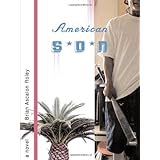
American Son: A Novel Review

American Son: A Novel
Average Reviews:

(More customer reviews)
Beautifully written. I originally didn't want to read this book because it looked like a gang novel, but my girlfriend told me it was good. After I got into it I couldn't put it down. It is a really sad, at times painfully so, book. I really got caught up in the characters and the mistakes they would make. I am a Pilipino and found a lot here that resembled my own life growing up, like being ashamed of my own culture and feeling like Filipinos are invisible. The tragedy about these characters is that they suffer from a lack of pride. The mother is especially sad and endearing. This isn't the sort of Asian Ameican novel I've seen before, full of rice and orientalism for the NPR crowd. It's real and honest.

Click Here to see more reviews about: American Son: A Novel


Buy Now

Click here for more information about American Son: A Novel

Read More...

The New Digital Shoreline: How Web 2.0 and Millennials Are Revolutionizing Higher Education Review

The New Digital Shoreline: How Web 2.0 and Millennials Are Revolutionizing Higher Education
Average Reviews:

(More customer reviews)
The New Digital Shoreline: How Web 2.0 and Millennials Are Revolutionizing Higher Education offers a fine survey of the complex effects of Web 2.0 on higher education, documenting forces that educators need to know about to modify interactions with students and peers. From understanding how the population of the new Web is different with different expectations to understanding the new mind-set of Web 2.0, this is packed with details supporting a reinvention of higher education to meet these new perspectives - a support which goes beyond just adding new technology to the learning mix. Higher education collections must have this new approach!

Click Here to see more reviews about: The New Digital Shoreline: How Web 2.0 and Millennials Are Revolutionizing Higher Education

Two seismic forces beyond our control - the advent of Web 2.0 and the inexorable influx of tech-savvy Millennials on campus - are shaping what Roger McHaney calls 'The New Digital Shoreline" of higher education. Failure to chart its contours, and adapt, poses a major threat to higher education as we know it.These forces demand that we as educators reconsider the learning theories, pedagogies, and practices on which we have depended, and modify our interactions with students and peers-all without sacrificing good teaching, or lowering standards, to improve student outcomes. Achieving these goals requires understanding how the indigenous population of this new shoreline is different. These students aren't necessarily smarter or technologically superior, but they do have different expectations. Their approaches to learning are shaped by social networking and other forms of convenient, computer-enabled and mobile communication devices; by instant access to an over-abundance of information; by technologies that have conferred the ability to personalize and customize their world to a degree never seen before; and by time-shifting and time-slicing.As well as understanding students' assumptions and expectations, we have no option but to familiarize ourselves with the characteristics and applications of Web 2.0-essentially a new mind set about how to use Internet technologies around the concepts of social computing, social media, content sharing, filtering, and user experience.Roger McHaney not only deftly analyzes how Web 2.0 is shaping the attitudes and motivations of today's students, but guides us through the topography of existing and emerging digital media, environments, applications, platforms and devices - not least the impact of e-readers and tablets on the future of the textbook - and the potential they have for disrupting teacher-student relationships; and, if appropriately used, for engaging students in their learning.This book argues for nothing less than a reinvention of higher education to meet these new realities. Just adding technology to our teaching practices will not suffice. McHaney calls for a complete rethinking of our practice of teaching to meet the needs of this emerging world and envisioning ourselves as connected, co-learners with our students.

Buy Now

Click here for more information about The New Digital Shoreline: How Web 2.0 and Millennials Are Revolutionizing Higher Education

Read More...

Teaching Writing Using Blogs, Wikis, and other Digital Tools Review

Teaching Writing Using Blogs, Wikis, and other Digital Tools
Average Reviews:

(More customer reviews)
This book is a great introduction to thinking about how to use a variety of digital tools for the purposes of teaching writing. The book starts out with a helpful intro. that discusses how the literacy practices of reading and writing are changing via online interaction and then goes into each of these different practices.
What I enjoyed most is how the the book organizes its discussions of digital tools according to the thinking/writing processes they promote. For example, wikis are discussed in a chapter on collaborative writing, while video composition is discussed in a chapter on storytelling. In this sense the book is more than a "how to" manual in that it gets at how these tools can be used to promote writing.
For those who want a book jam-packed with classroom friendly URLs and teaching resources, they will enjoy the companion wiki that goes along with the book. I appreciate how the book explains the ideas while the wiki provides numerous examples to illustrate and support how it can be done in the classroom.
This book will be helpful to those who want to use digital tools to update how they teach writing, or for those already digitally savvy, who want to expand their digital writing repertoire.

Click Here to see more reviews about: Teaching Writing Using Blogs, Wikis, and other Digital Tools

See how to use various digital tools including blogs, wikis, digital mapping, online chat, digital storytelling, podcasts, e-portfolios, and others to teach writing in the classroom. Packed with examples of teaching activities and student writing, this one-of-its-kind book demonstrates how to use search engines and digital mapping to develop information, online discussion tools and blogs to formulate ideas, Wikis to write collaboratively, digital storytelling and poetry to create multimodal texts, podcasts and vlogs to create audio and video texts, online commenting tools to provide peer feedback, and much more. Included are links to new tools and activities on the authors constantly updated Web site.

Buy Now

Click here for more information about Teaching Writing Using Blogs, Wikis, and other Digital Tools
Read More...