Showing posts with label economic policy. Show all posts

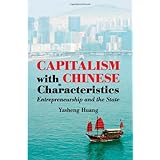
Capitalism with Chinese Characteristics: Entrepreneurship and the State Review

Capitalism with Chinese Characteristics: Entrepreneurship and the State
Average Reviews:

(More customer reviews)
Professor Huang has written a brilliant critique of China's economic development (and of necessity, debunks much of what others have written about China's economy). He shows that China's development started in the 1980's with government programs focused on the rural economy, with programs designed to encourage rural entrepreneurs. Unfortunately with the Tiananmen Square crackdown, the new government leaders (technocrats from Shanghai) focused on major programs for urban areas, including massive construction projects and encouragement of foreign investment. Rural enterprises (and their required informal and official funding networks) were shut down. Although there was a proliferation of highrise buildings and massive construction projects (Three Gorges Dam, Shanghai's maglev, the Olympics,...) the result was slower income growth (especially in the rural areas), increasing illiteracy (parents could not afford to pay rapidly increasing tuitions), declining health care (hospitals, like schools, also became profit centers for local bureaucrats), expropriation of farmers' land, and much much more corruption, all of which has led to increasing social disorder among peasants who are finding themselves worse off. Party cadres' pay has rapidly increased and there are now far more of them. And productivity growth has declined or has even straight-lined. A return to the policies of the 1980's is clearly in order, but the current leaders, while trying to fix things, are still relying on top down commands and controls, and they have a much larger bureaucracy to keep happy.
Anyone trying to understand China's economic development over the last thirty years must read this. The causes of China's growth are badly misunderstand; too many economists and analysts have been overwhelmed by the vision of Shanghai's massive development without understanding the tremendous cost and waste involved, and the penalties paid by the common people (income for the poorest Shanghaiese has actually been going down).
The book should also be a lesson for Western politicians who think that China's methods of centralized planning and control of industrial policy can be applied in the West. Or maybe our politicians also understand how government control can lead to huge payoffs for politicians (as with Countrywide Credit's payoffs of at least two senators and lots of others politically connected, not to mention the huge salaries paid to Democrat politicians 'working' at Fannie Mae).
Read this book if you have any interest in China or economic development!

Click Here to see more reviews about: Capitalism with Chinese Characteristics: Entrepreneurship and the State

An Economist Book of the Year, 2008This book presents a story of two Chinas - an entrepreneurial rural China and a state-controlled urban China. In the 1980s, rural China gained the upper hand, and the result was rapid as well as broad-based growth. In the 1990s, urban China triumphed. In the 1990s, the Chinese state reversed many of its productive rural experiments, with long-lasting damage to the economy and society. A weak financial sector, income disparity, rising illiteracy, productivity slowdowns, and reduced personal income growth are the product of the capitalism with Chinese characteristics of the 1990s and beyond. While GDP grew quickly in both decades, the welfare implications of growth differed substantially. The book uses the emerging Indian miracle to debunk the widespread notion that democracy is automatically anti-growth. The single biggest obstacle to sustainable growth and financial stability in China today is its poor political governance. As the country marks its 30th anniversary of reforms in 2008, China faces some of its toughest economic challenges and substantial vulnerabilities that require fundamental institutional reforms.

Buy Now

Click here for more information about Capitalism with Chinese Characteristics: Entrepreneurship and the State

Read More...

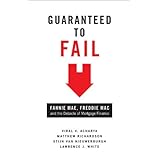
Guaranteed to Fail: Fannie Mae, Freddie Mac, and the Debacle of Mortgage Finance Review

Guaranteed to Fail: Fannie Mae, Freddie Mac, and the Debacle of Mortgage Finance
Average Reviews:

(More customer reviews)
On a forum such as Amazon, book readers are free to write whatever reviews they like; but when they completely miss the point, throw in quotes out of context, and mistakenly ignore important sources of data used in a book, authors feel compelled to respond. In response to the review and exchange by "nycreader1", we suggest that readers should consider our clarifications below and also look at what we believe are more balanced and accurate book reviews provided in the Financial Times and Bloomberg:
[...]
The title "Guaranteed to Fail" refers to the fact that the GSEs took on the credit risk of almost 50% of the mortgage market with very little capital. It is also an intended pun as they were for all practical purposes guaranteed by the government.
With respect to the reviewer ("nycreader1")'s points concerning gaps and omissions, we beg to differ:
(1) The fact that the GSE mortgages were higher quality than others is discussed in the book, but unfortunately those mortgages were not sufficiently high given that the GSEs held less capital (much higher leverage), as confirmed by their eventually facing losses in the range of (at least) $200 billion.
(2) The government-sponsored hedge fund reference is only meant to describe their risk taking, with the focus on "government-sponsored" not just on hedge fund, nor to say that they were actually organized as a hedge fund. Their extensive use of derivatives to hedge some of their interest rate risk is consistent with that terminology.
(3) The reviewer's comment on interest rate risk is taken out of context. The book explains how analysts and academics missed the boat by not focusing on the credit risk of the GSEs' holdings and guarantees -- i.e., by not realizing that the mortgages were not sufficiently safe relative to the GSEs' (far too thin) capital levels.
(4) Our reference to the accounting scandals is made in passing and is used just to explain why their mortgage portfolios didn't grow. We are unsure why these scandals should be necessarily have been called "frauds". More importantly, we do make a compelling case that there were portfolio and leverage issues at the GSEs even post-accounting scandals.
(5) We do describe the GSE loan performance. The data used are primarily those of Fannie and Freddie themselves, and their regulator (the FHFA). We in fact went to great lengths to ensure our conclusions were consistent with their own data. We don't "rely" on Pinto's data (which the reviewer claims in a response to a comment) but offer it only as corroborative evidence (see pp. 37-38).
Of course, we had to rate the book to post this review and we have rated it as 5-star, but the point was to convey that we have researched hard on the GSEs before putting this book out,
unlike what the review by nycreader1 (mistakenly) asserts.
- Viral Acharya, Matthew Richardson, Stijn van Nieuwerburgh and Lawrence J. White, authors of Guaranteed to Fail

Click Here to see more reviews about: Guaranteed to Fail: Fannie Mae, Freddie Mac, and the Debacle of Mortgage Finance


Buy Now

Click here for more information about Guaranteed to Fail: Fannie Mae, Freddie Mac, and the Debacle of Mortgage Finance

Read More...

The Fifteen Biggest Lies about the Economy: And Everything Else the Right Doesn't Want You to Know about Taxes, Jobs, and Corporate America Review

The Fifteen Biggest Lies about the Economy: And Everything Else the Right Doesn't Want You to Know about Taxes, Jobs, and Corporate America
Average Reviews:

(More customer reviews)
Author Joshua Holland comes out swinging against the rhetoric and arguments that conservatives and Republicans have been inundating media and blogs with, in the past several years about the future and stability of our economy.
Holland takes fifteen topics, topics on taxes, jobs, corporations, free trade, illegal immigration, unions, healthcare, the deficit, minorities, and socialism, to name a few, and demolishes their arguments and charges that Republicans misinform the public to instill fear in the electorate.
For years, Republicans and conservatives have turned their message into an art form of slogans and falsehoods that do not stand scrutiny when Holland gives you the analysis, the stats, or the historical reality behind each of them.
Holland's prose is somewhere between strident and measured, but lucid and factual. He offers percentages and charts that are easy to follow and do not bore. He demonstrates clearly how corporations and lobbyists control the message and determine everything from legislation to trade agreements.
This is for the avid observer of the political struggle that is currently raging in this country. This is especially informative for the person whose political awareness is just germinating. The very well informed may wish to read this to recall things momentarily forgotten.
It is an alarming story and a depressing one. It is the story of our country being owned by the entities just described, how legislators do the bidding of their contributors rather than citizens, how our government does more to protect business than consumers.
What was just as important is what Holland didn't say. He was describing the slow strangulation of the death of a republic that was bought through avarice and greed with a powerful message of fear, and the perversion of a dream that belonged to our Founding Fathers.
I can give you fifteen reason why you might want to read this.
I also recommend the following:
The End of America: Letter of Warning to a Young Patriot
Free Lunch: How the Wealthiest Americans Enrich Themselves at Government Expense (and StickYou with the Bill)
Over the Cliff: How Obama's Election Drove the American Right Insane
Perfectly Legal: The Covert Campaign to Rig Our Tax System to Benefit the Super Rich--and Cheat Everybody Else
The Looting of America: How Wall Street's Game of Fantasy Finance Destroyed Our Jobs, Pensions, and Prosperity'and What We Can Do About It


Click Here to see more reviews about: The Fifteen Biggest Lies about the Economy: And Everything Else the Right Doesn't Want You to Know about Taxes, Jobs, and Corporate America

AlterNet editor Joshua Holland demolishes the Right's biggest and most outrageous myths about the economy

Taxes kill growth. Labor unions hurt their members. Government regulation destroys jobs. These are just a few of the biggest lies in the web of misinformation spun by conservatives and the Chamber of Commerce. Holland's book dissects each malicious fiction to show how the Right is just plain wrong on the economy—wrong on jobs, wrong on the deficit, wrong on taxes, wrong on trade.
Takes down old and new conservative myths about the economy, including healthcare, stimulus, progressive taxes, Wall Street regulation, and more
Filled with recent quotes from conservative politicians and pundits, from the misleading to the laughable to the totally outrageous
Tackles specific aspects of the Republicans' economic agenda, including their 2010 alternatives to Obama's budget
Deftly written and rigorously documented by Alternet senior writer/editor Joshua Holland

With the economy set to be the driving issue before and after the 2010 midterm elections, The Fifteen Biggest Lies about the Economy sets the record straight on every part of the conservatives' economic agenda.

Buy Now

Click here for more information about The Fifteen Biggest Lies about the Economy: And Everything Else the Right Doesn't Want You to Know about Taxes, Jobs, and Corporate America

Read More...