Showing posts with label e-learning. Show all posts

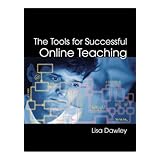
The Tools for Successful Online Teaching Review

The Tools for Successful Online Teaching
Average Reviews:

(More customer reviews)
i found this book to be an excellent research reference for online teaching. It provides solutions that the author has personally used and integrated into her teaching methodology.

Click Here to see more reviews about: The Tools for Successful Online Teaching

Online education continues to grow exponentially, and the majority of universities now offer online courses. However, the unprecedented explosion of online learning courses has resulted in increased demands for online teachers, and regular classroom teachers are often asked to teach in an online environment.Tools for Successful Online Teaching introduces teachers to the tools of the learning management system (LMS), or the online learning environment. These tools, including chat, threaded discussion, e-mail, surveys, exam builders, and more, are explored to show the strengths and weaknesses of each tool. Multiple examples of objectives and activities are provided to instill a deep understanding, and the reader will gain a long-term ability to create a unique curriculum.

Buy Now

Click here for more information about The Tools for Successful Online Teaching

Read More...

Using Moodle: Teaching with the Popular Open Source Course Management System (Community Press) Review

Using Moodle: Teaching with the Popular Open Source Course Management System (Community Press)
Average Reviews:

(More customer reviews)
I was very disappointed with this book and will be returning it.
If you have spent a few minutes playing with Moodle and read even a little of the online manual, this book adds nothing new. The system is easy to figure out, as most items are pretty self-explanatory and each option has a handy pop-up help screen that explains anything that you don't understand. The online documentation is very good.
I was hoping this book would explain how to do more advanced things in Moodle - how the many available add-on modules work and what they contribute to a finished system, tips and tricks to add videos and flash files to your courses, best practices for course development, advanced customizing, etc. But there was none of that in the book - only the same information that is already included free with Moodle. Save your money!

Click Here to see more reviews about: Using Moodle: Teaching with the Popular Open Source Course Management System (Community Press)


Developed by an extremely active open source community, Moodle is a sophisticated course management system that's ideal for creating dynamic online learning communities and for supplementing face-to-face learning. Used in more than 115 countries and supporting over 60 languages, Moodle can scale from a single-teacher site to a 40,000- student university.

Teachers who use Moodle have access to an array of powerful tools such as assignments, forums, journals, quizzes, surveys, chat rooms, and workshops. Using Moodle is a comprehensive, hands-on guide that explains how the system works, with plenty of examples and best practices for its many features and plug-in modules. Authored by a member of the Moodle community, this authoritative book also exposes little-known but powerful hacks for more technically savvy users. For anyone who is using-or thinking of using-this CMS, Using Moodle is required reading.


Buy Now

Click here for more information about Using Moodle: Teaching with the Popular Open Source Course Management System (Community Press)

Read More...

Moodle 2.0 for Business Beginner's Guide Review

Moodle 2.0 for Business Beginner's Guide
Average Reviews:

(More customer reviews)
Moodle 2.o for Business is part of the Packt Moodle series and is co-written by Jason and Jeanne Cole and Gavin Henrick. It's refreshingly different from the other Moodle books in that its focus is not on students in an educational institution learning, say geography; rather; it concentrates on another major global use of Moodle - commercial enterprise. It shows how a company, whatever size, can benefit from Moodle's features to improve its recruitment, training, staff development and internal communication processes. Written as a "Beginner's guide"; its language is accessible and, despite being collaboratively authored, it reads smoothly in a consistent style. (Hands up -I was one of the three technical reviewers of the book.)
Chapter 1 starts us off by suggesting ways to download Moodle to experiment/play with it before using it "in anger" - as the modern saying goes! We learn the very basics of course administration, adding resources and a discussion space. I particularly liked the "E-learning framework for implementing Moodle" section where we consider ADIME (Align/Develop/Implement/Measure/Evaluate) and also the case study at the end of the chapter. The inclusion of real-life case studies is an inspired Plus to this book, I believe, setting in a genuine context the features explored in the chapters and sharing Moodle experiences from the world of business.
Chapter 2 explains how potential employees can create new accounts (safely!) on your Moodle site and how the assignment module can be used to allow them to send in their CVs. Employers can use the assignment grading facility to rate the applications; the quiz module can serve as a means of administering competency tests and the choice module can help schedule interviews. This whole chapter appealed to my mindset because I love tweaking/adapting/manipulating Moodle to do what you need it to do, and here were whole scenarios I hadn't considered before.
Chapter 3 handles the need to provide product knowledge both internally and externally. (Incidentally, an added bonus for me reading this book was that not only did it give me some ideas about using Moodle for business, it actually also taught me about business!) We looked at different course formats, created a glossary f0r specific terminology, a chat session for role-playing and a database for peer reviewing created product knowledge sheets. Another case study at the end of the chapter gives, in this instance, AA Ireland the opportunity to pass on advice for businesses planning to implement Moodle.
Chapter 4 can be downloaded as a freebie taster! Its focus is how to use Moodle to deliver in-house staff training such as legal compliance or health and safety to selected groups of employees. Here, the authors take us through the Lesson module and explain how to put groups and groupings to good effect. Completion tracking, whereby employees can track their progress is also explained in this chapter, leading usefully on to the (new to Moodle 2.0) concept of course completion.
Chapter 5 is a very thorough explanation of the use of outcomes in Moodle - a feature I sometimes think is underused (but maybe that's just me?) Outcomes can help with competency tracking and the reader is shown how to add an outcome to an assignment and grade it. I actually learned something myself too - how to import outcomes via CSV- how cool is that?!
Chapter 6 discusses how to make the most of Moodle's features to support informal communities of practice. So we are talking forums, wikis and collaborative glossaries and databases. The reader also gets to learn about how enabling RSS feeds can improve communication
Chapter 7 is about web conferencing. Moodle doesn't have a built-in web conferencing tool so the authors discuss the various alternatives that can plug in to Moodle - one of them being Adobe Connect Pro (which I assume you have to pay for) and the other being Big Blue Button (which is free) I have experience of both of these and they are both very valuable additions to an online training program. Once more, at the end of the chapter, we have an informative case study - this time from Moodle Partner Remote Learner (for whom the authors work)
Chapter 8 concentrates on repositories and portfolios -ie, how, in Moodle 2.0, you can bring in content from external sources such as Google Docs or Alfresco and you can "push it out" to external sources such as Mahara. As I increasingly use Mahara myself, I can see it as an essential add- on to a commercial Moodle site - indeed, maybe the authors should consider writing Mahara for Business next?
Chapter 9 is about enrolment plugins (how best to get your users onto your Moodle, allowing them to keep their existing corporate usernames and passwords. It also touches on themes as having an attractive corporate image on your Moodle site is essential - themes in Moodle 2.0 are much enhanced and easily customisable. Finally, and just as important, we learn how to change the words on Moodle. By default, Moodle uses terms such as "teacher", "student" and "course" as its origins are based in the educational environment - but it is a simple move to alter these to language more suited to your own organisation.
In summary -if you are thinking of using Moodle in a commercial enteprise, then this is an extremely valuable book :) On a personal level, I enjoyed it because it shows Moodle being used differently from the norm I am familiar with, so it was an inspiring read :)


Click Here to see more reviews about: Moodle 2.0 for Business Beginner's Guide

Part of Packt's Beginner's Guide series, each chapter looks at a different aspect of using Moodle in a business environment, and steadily guides the reader through setting Moodle up in their own business with the help of practical examples, accompanied by lots of screenshots. Each chapter also includes case studies from well-known companies that have already implemented Moodle. If you are responsible for training, recruitment, or maintaining any guidelines within your company, then this book is for you. No previous experience with Moodle is necessary as the examples are easy to follow.

Buy Now

Click here for more information about Moodle 2.0 for Business Beginner's Guide

Read More...

Moodle 1.9 E-Learning Course Development: A complete guide to successful learning using Moodle Review

Moodle 1.9 E-Learning Course Development: A complete guide to successful learning using Moodle
Average Reviews:

(More customer reviews)
I opened my copy of Moodle 1.9 E-Learning Course Development by William Rice with a high expectation that it would be an informative and practical reference text. Why? I was about to upgrade to Moodle 1.9. Did it meet my expectations?
Now read on...
Using open source software can be a daunting experience, regardless of your technical or business experience, and this text's purpose is to shorten users' path to competency in the application. Broadly speaking, the text covers four Moodle-related activities:
* Installing and configuring Moodle 1.9
* E-Learning course development and delivery
* E-Learning course management
* Moodle administration and maintenance
The author assumes zero previous knowledge of the application, and Moodle 1.9 E-Learning Course Developmentbegins by describing Moodle's Social-Constructionist approach to learning, before bringing the reader on a whistle-stop tour of Moodle 1.9's features and functionality- a very good idea indeed, as this goes some way to providing an understanding of why Moodle 1.9 looks and works the way it does for newcomers, acts as a pertinent reminder for experienced Moodlers, and sets the context for the course creation sections later in the book.
The book is structured in a logical and linear fashion: the author aims to guide you through the full application implementation and course development process. The text seems to be aimed primarily at teachers and trainers and the author spends the majority of the manual discussing - in detail and very effectively - the processes, "how-to's" and "gotchas" of using Moodle from a teaching and training perspective. I must point out that something strange must have happened during the editing process of the book, as there's some glaring typos (and even a whole word omitted from the back cover of the text) which are a distraction, but do not deter from the usability of the manual.
As I mentioned at the beginning of this review, this book was my companion through a recent upgrade from Moodle 1.6 to 1.9, and it did not let me down. As an experienced Moodle user, I used the book very much as a "just enough, just in time" resource rather than as an end-to-end guide through the application. My experience was that the text works very well when used in this fashion. Some other positive aspects of my "user experience" of the text included the author's accessible and direct writing style and use of web-based resources like a downloadable Moodle Project Plan. In my view this text is a straightforward and reliable companion for those who seek to find out more about - and use - Moodle 1.9.


Click Here to see more reviews about: Moodle 1.9 E-Learning Course Development: A complete guide to successful learning using Moodle

A complete guide to successful learning using Moodle, focused on course development and delivery and using the best educational practices. Moodle is relatively easy to install and use, but the real challenge is to develop a learning process that leverages its power and maps effectively onto the content established learning situation. This book guides you through meeting that challenge. This book is for anyone who wants to get the best from Moodle. Beginners will get a thorough guide to how the software works, with great ideas for getting off to a good start with their first course. More experienced Moodlers will find powerful insights into developing more successful and educational courses.

Buy Now

Click here for more information about Moodle 1.9 E-Learning Course Development: A complete guide to successful learning using Moodle

Read More...

Moodle 1.9 Teaching Techniques Review

Moodle 1.9 Teaching Techniques
Average Reviews:

(More customer reviews)
It is my pleasure to review another e-book from Packt Publishing called Moodle 1.9, Teaching Techniques by William Rice and Susan Smith Nash. This review is based entirely on my personal point of view. I am not an expert in Moodle. I undertook this project in order to learn more and improve my knowledge of the subject, both from an active learning perspective and from a future teaching perspective.
Moodle 1.9 Teaching Techniques was first published in January 2010. There are 11 chapters and at 216 pages, it makes for fairly compact reading. Who is the book aimed at? Well, the overview states that it is suitable for university and professional teachers. There is an assumption that you have knowledge of the Moodle platform's basic features, and that you have "some proficiency" with Moodle. This book is not intended to be used as a guide on how to use Moodle per se, but as the title suggests, it is a comprehensive guide on how to adapt the many and varied features of Moodle to customise and personalise your course design. One of the facets I liked about the book is that it guides you from the teacher's point of view and also gives you an insight into how the modules are viewed from a learner's point of view. Moodle 1.9 Teaching Techniques aims to show you how to get the best from Moodle and at the same time, shows you how to construct high-quality, durable and relevant courses, which will perfectly suit your students' needs.
The building blocks which permit you to shape and form your highly individualised courses are outlined clearly within the introductory chapter. The authors use excellent screenshots and diagrams to guide the reader through the process of the key tools within Moodle and provide an abundance of useful tips and advice. In particular, Chapter 2's focus on using the Forum as a key tool for organising all the instructional content, was very useful reading for me. Click on the link and you can download a free preview of Chapter 2, called "Instructional Material".
Chapter 4 on Assessment was enlightening. Students might be fearful of the terminology, but in Moodle, Assessment is much more than simply checking up on how you are getting on. This feature can boost a student's self confidence and can create independent learners. For example, Moodle provides ample opportunities for creating quizzes, which can be taken by students in short spells or specific timed slots in order to assess how they are doing. Good screenshots provide a useful guide to how to utilise Asessment to its maximum potential.
I enjoyed reading about the Wiki feature in Chapter 6. The authors outline the reasons why the Wiki is useful to achieve learning objectives. The ability to create individual student wikis is a welcome capability within the Moodle platform. I got a bit lost in some of the sections, however, and this is where some Moodle proficiency is assumed by the authors.
Useful tips and guidelines were given in Chapter 7 Glossary Solutions. I was particularly interested in the "schema" building involved in the Glossary function. Each course can only have a main glossary, but with many secondary glossaries. When a Glossary is created, a Database of individual entries is automatically created. Clear screenshots are provided to facilitate understanding and tips about including memory aids for the Glossary proved to be of a very helpful nature. One of the main advantages of including the Glossary in a course design is its constant presence on the sidebar. It can be made into an interactive activity and the "Random Glossary Block" feature is also useful. New information is updated every time students log on. As a student of Moodle learning myself, I find this constant update to be particularly beneficial as a means to keeping an eye on the "flow" of new information.
Great tips are given for how to maximise the Choice activity function. Polls and debates can be easily created to make a lively teaching aid. This function also makes choosing teams for activities much easier and also allows for feedback polls to ascertain whether the pace of a course is good for students.
The final chapter of Moodle 1.9 Teaching Techniques highlights the Portfolio Gallery solution. I really liked the notion of "dialogical imagination", which can ensue from "reaction videos" found in Youtube and often posted on FaceBook. Moodle now has an inbuilt facility to integrate social networking sites such as FaceBook and Twitter. RSS feeds can also be easily implemented as well. This all makes for a very powerful, engaging and highly interactive teaching and learning platform. Indeed, the terminology used is "ubiquitous learning"This chapter contains some excellent tips on how to engage students in creating exciting writing projects for an e-portfolio. A sample assignment on "My Hometown" is highlighted by the authors. I found the notion of a "capstone" experience or final project to be of great interest. The theme of collaboration plays a big role in motivating students to do their best.
At 216 pages, Moodle 1.9 Teaching Techniques makes for an easily managed read and offers some invaluable tips and insights into how to design a unique and personalised Moodle course to maximum effect. As a platform for teaching and learning, Moodle certainly satisfies the growing need for "ubiquitous learning", which comprises of e-learning, mobile learning and hybrid delivery, both synchronous and asynchronous. I certainly learned a lot from a fairly inexperienced Moodler's perspective, but I found some of the explanations were a bit too complex for my limited knowledge. This book should satisfy the more experienced Moodle user's quest for how to implement a successful and dynamic course design and indeed provides invaluable tips that can be applied immediately.


Click Here to see more reviews about: Moodle 1.9 Teaching Techniques

This book contains clear guidance for all who want to put together effective online courses that motivate students and encourage dynamic learning. There are clear, step-by-step instructions with helpful screenshots and diagrams to guide you along the way. If you want to unleash your teaching talents and develop exciting, dynamic courses that really get students moving forward, then this book is for you. Experienced Moodlers who want to upgrade to Moodle 1.9 will find powerful insights into developing more successful and educational courses.

Buy Now

Click here for more information about Moodle 1.9 Teaching Techniques

Read More...

Moodle Teaching Techniques: Creative Ways to Use Moodle for Constructing Online Learning Solutions Review

Moodle Teaching Techniques: Creative Ways to Use Moodle for Constructing Online Learning Solutions
Average Reviews:

(More customer reviews)
William Rice, in Moodle Teaching Techniques, has created a resource that goes beyond the basic "keystroke and click directions" provided by many introductory manuals. Rice provides a variety of practical suggestions for teachers and trainers and avoids the discussion of technical issues which are often irrelevant to Moodle course creators.
The book begins by introducing the instructional principles he uses as the basis for the ideas and activities shared throughout the book. Those without formal educational training will find these few pages informative and helpful, while those with an instructional design or educational background benefit from a reinforcement of those principles we learned, but sometimes forget when the development begins. For example, Rice discusses the value of forums and collaboration among course participants, an important element in good course design, but one which is lacking in many Moodle courses. I was pleased to see this principle reinforced and think it is helpful for readers to be reminded.
The core of the book consists of chapters dedicated to various Moodle tools and specific applications; all presented with the expectation that the reader is familiar with Moodle basics. As I started reading, I was skeptical that Rice was going to present any unique ideas that I had not seen or thought of before--I've been using Moodle for over four years and have worked with hundreds of schools, companies, and organizations through which I've heard many interesting and unusual ideas for the implementation of Moodle activities. As I read, however, I found some ideas that really made me think again about how I had been doing things. In some cases, there was new information that I didn't realize was useful until after the fact. For instance, there are several pages dedicated to network or IP addresses as they relate to proctoring quizzes. As I read the information, I thought initially that too much space was dedicated to the concept; thinking that most readers would contact their network director or that they would know the information themselves. A few days later though, as I was conducting a training and discussing IP addresses, I realized that the information I picked up made me aware of some nuances surrounding proctored quizzes and activity tracking that I had not considered before.
In addition to the ideas Rice presents for the application of the various modules, one of the biggest strengths of the book is that he includes instructions for "real" teacher tasks. Readers will find one section of the book dedicated to tracking participant activity, which is a skill that many teachers and trainers will utilize. Rice mentions using everything from the activity logs to course reports to see what learners are doing. The book also addresses more obscure, under-used features such as splitting forums, using groups and custom scales. Rice hit the mark here in identifying these more advanced topics as being especially valuable.
The other feature that will benefit readers is that Rice presents the "why" behind his choices. For example, he explains his selection of a forum over a wiki for one activity. In another section, he explains why he would use a wiki instead of an assignment, blog, forum, or journal. In my experience, course creators do not struggle as much with which button to click, but rather more in deciding which tool is best for a specific learning activity. Rice's explanations provide the reader insight to help guide them through those decision-making processes.
While Moodle Teaching Techniques is a valuable resource for Moodle users, there are some caveats that should be mentioned. First, as Moodle 1.9 is released later this month, I recognize that many readers will be looking for information to help them make the transition. Though this book makes mention of being based on 1.9, it is really based on 1.8 functionality. For most of the content, the version is not significant as the information is true for both 1.8 and 1.9 and the book is more about big ideas than buttons. However, there are a few pages that mention groups and the gradebook, both of which have seen large changes in 1.9. The good news is that the suggestions still apply and the functionality exists in both 1.8 and 1.9, but the steps will be a bit different. In the case of the gradebook example, the reader will likely have to spend some time finding their own solution to the suggested implementation.
Aside from the version difference, my only other complaint is that while Rice professed that this book was not going to go step-by-step and was going to make some assumptions about prior knowledge, it seemed a bit inconsistent. In many places the instructions were detailed and very clear; I had no doubts that even a fairly novice Moodle user would be able to follow along. In other places though, I found myself wanting more information. For example, the lesson and the workshop are pretty complex tools and while the information presented was helpful, it could have been more so. While Rice generally follows his premise throughout the book, the lesson and workshop are tools that many people struggle with and readers may have benefited from a bit more detail about them.
Despite these minor complaints, I recommend this book without reservation. Moodle Teaching Techniques is a great companion resource to other more basic Moodle texts and manuals and provides many ideas to help teachers and trainers take their Moodle courses to the next level.

Click Here to see more reviews about: Moodle Teaching Techniques: Creative Ways to Use Moodle for Constructing Online Learning Solutions

Moodle is a free, open-source Learning Management System (LMS). Moodle is designed to help educators and trainers create online courses with opportunities for rich interaction. It is the world's most popular online learning system. It has many modules, which you can use to make your course unique and create an environment where your students will get maximum benefit. If you are a teacher or a corporate trainer with a desire to design effective and innovative Moodle courses, then this book is your best choice. The book assumes that you have a basic understanding of Moodle, but it does not need any programming knowledge. It's all about teaching and not programming. If you are new to Moodle, start with Moodle E-Learning Course Development by the same author.

Buy Now

Click here for more information about Moodle Teaching Techniques: Creative Ways to Use Moodle for Constructing Online Learning Solutions

Read More...

Social Media for Trainers: Techniques for Enhancing and Extending Learning (Essential Tools Resource) Review

Social Media for Trainers: Techniques for Enhancing and Extending Learning (Essential Tools Resource)
Average Reviews:

(More customer reviews)
This is the fourth Jane Bozarth book that I've purchased so clearly I'm a fan. The writing is clear and to the point; well-researched and includes numerous personal examples. Most importantly this book is chock full of practical advice. Jane tackles Twitter, Facebook, Blogs, Wikis, and other tools discussing advantages and disavantages of each medium. I especially liked the many activities that she suggests. For example, in the general discussion on Blogs Jane lists at least a dozen different activities such as Case Studies, Debate, Scavenger Hunt, and Round Robin providing explanations of how each activity might work in a blog. As a trainer, I can't wait to to try some of these for myself. Even though the book is a compact 173 pages, I feel it could benefit from an index. Also, as is true of many other training books, this is a bit pricey at $35. Nevertheless, I'm certain that this book will be very useful for a trainer seeking to take advantage of Social Media. It is very timely and relevant.

Click Here to see more reviews about: Social Media for Trainers: Techniques for Enhancing and Extending Learning (Essential Tools Resource)

A how-to resource for incorporating social media into training


Whether you work in a traditional or virtual classroom, social media can broaden your reach and increase the impact of training. In Social Media for Trainers, e-learning and new media expert Jane Bozarth provides an overview of popular tools, including blogs, wikis, Twitter, Facebook, YouTube, SlideShare, Flickr, and others. You'll learn to leverage each medium's unique features and applications to deliver training, facilitate discussions, and extend learning beyond the confines of a training event. This key resource offers a new set of powerful tools for augmenting and enhancing the value of your training.

PRAISE FOR SOCIAL MEDIA FOR TRAINERS

"Clear explanations and practical examples of the use of social media for learning, make this book essential reading for all workplace trainers."-Jane Hart, founder, Centre for Learning and Performance Technologies, and founding member of the Internet Time Alliance

"... a practical, intelligent book teaching trainers how to effectively utilize technology for real learning outcomes."-Karl Kapp, professor of Instructional Technology at Bloomsburg University and author of Learning in 3D and Gadgets, Games and Gizmos for Learning

"Trainers who want to succeed in the new social learning world should read this book. Jane has made social media easy, practical, and simple to use."-Ray Jimenez, PhD, Chief Learning Architect, VignettesLearning.com

Buy Now

Click here for more information about Social Media for Trainers: Techniques for Enhancing and Extending Learning (Essential Tools Resource)

Read More...

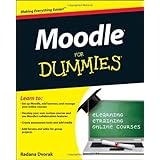
Moodle For Dummies (For Dummies (Computer/Tech)) Review

Moodle For Dummies (For Dummies (Computer/Tech))
Average Reviews:

(More customer reviews)
Disclosure: I write and review Moodle books for Packt Publishing. However, I bought this book myself from Amazon.co.uk so this is an objective review by a reader who paid her own way :)
Its Big Plus: it is much cheaper than the Packt series of Moodle books and, as with all Dummies books, I presume it will be available in stores in the Real World rather than POD (I bought mine from Amazon.co.u. where it was not much more than GBP£10) Its big Minus: it is written for 1.9 and although as the author says, much of the content is transferable, there are some significant differences and major additions that it lacks.
If you want to skip to the conclusion: this is a helpful book, written in a easy to read style. The book is divided up into five sections: Getting Started with Moodle where we consider course layout and enrolment; Creating and Managing Course Content , which is mainly static resources including multimedia and the gradebook; Adding Activities - as you'd expect! followed by Moodle Management and then The Parts of Tens, which fifth section is mainly ideas and suggestions for engaging your learners and keeping them involved.
Each chapter is fully illustrated with clear screenshots and explanatory tables and I cannot praise enough the author's personable style. Having read and reviewed a fair number of Moodle books now, it is increasingly apparent to me that it's difficult to strike a balance between Moodle for admins and Moodle for teachers. If your book IS for Admins or specifically for teachers, then that's fine - but some books, such as Wm Rice's E Learning Course Development (which is being revised for 2.0 ) and indeed my own Moodle 2.0 First Look try to cover both aspects, and it's not at all straightforward. You have to be careful if you are an admin and also a teacher that you don't confuse teacher readers by lettting them think they have more admin rights than they actually do (this was a criticism of the Wm Rice book which I think will be redressed) On the other hand, if you are an admin reading the book, then you will want to know about server issues, bulk user upload, site backup/upgrading etc and not feel sidelined by pedagogical discussions. My own criticism of my own Moodle 2.0 book is that it didn't cover those admin issues in enough detail. Radana's balancing act is a good one as she frequently points readers to the section of admin/teacher that applies to them or to the moodle docs. (Actually, the docs have been altered in the last day, so I presume her links will now redirect to the 2.0 docs) If there is a bias, I feel it is towards the teacher side of Moodle - and that's no bad thing. While the reader is told how they can get hold of a Moodle, there aren't detailed instructions on setting up your own - I reckon, possibly if you are a potential admin with your own server and knowledge of PHP and MySQL, then you probably won't be reading a Dummies book. On the other hand, if you want a quick, no-nonsense intro to Moodle's many activities then this book is very readable.
The first couple of chapters deal with the definitions of CMS. LMS, VLE, LCMS etc and also - to my interest- how to understand our learners and their generational differences. We're in the territory of Digital Natives vs Digital Immigrants here - and, courtesy of Radana, I now know that I am a Digital Immigrant Baby Boomer II whereas my children are Digital Natives Generation Y After busting some Moodle myths, we get on to setting up a course, enrolling users and managing groups. I'd have liked to have metacourses explained here, and also groupings as I think groupings is a very valuable feature especially if you have several groups in one course and you don't want them to see each other's work. Chapters 5 to 7 cover creating content mainly from the "add a resource" drop down, the HMTL editor and also choice and surveys. A section on multimedia is followed by a handy look in at Moodle's gradebook, although again, while the reader is shown how to add new scales, they are not introduced to outcomes and yet I am finding outcomes (criteria/goals/competencies, whatever you call them) are increasingly popular.
The book really comes into its own in the third section where, from chapters 8 to 12 we are taken through Moodle's many activity modules. Radana makes even the highly complex Lesson module accessible to all. Neither the workshop nor the HotPot module is covered here and I think that was a justifiable decision by Radana because in 1.9 the workshop, while usable, wasn't really recommended in its previous state. It's come back with a vengeance in 2.0 though. HotPotatoes was standard in 1.9 but with its eye closed and in 2.0 it has been moved to contrib. (It's still great!!)
If there was a weak area, I would say it was (similar to mine) in the Moodle Management section, Chapter 13 on admin. I felt it was an all too brief run through the admin settings with the occasional inaccuracy and confusion. For instance, if your Moodle front page is your showcase then you need to know more about managing Site Files than you learn here. Additionally, one of the most frequently asked questions on the moodle.org forums is missing - how to get a space in the middle of your front page to add images and wording (tick "include a topic section" in front page settings) That said, the emphasis is definitely on the individual course manager and his/her course, and Chapter 14 is a useful resource for those many readers with that role. The strength of the book lies in its style and the fact that it is written by an educator heavily involved in elearning, keen to link pedagogy to practice.
Not being familiar with the Dummies series, I wasn't aware until I read it that the final part of the book The Part of Tens is meant to include the little extras that don't fit in elsewhere. What a good idea! I enjoyed this - ten questions to ask before creating your course and ten ways to keep your learners involved.
In conclusion then -if you are a techie you might find the book lacking in some areas (which might be filled by Alex Buchner's Moodle Admin soon also available in a 2.o flavour.) However, if you are new to Moodle 1.9 then this book is written in an approachable way, especially if you are a relatively non -technical person "saddled" with admin but mainly focused on using it with your learners. Let's hope there will be a 2.0 version.

Click Here to see more reviews about: Moodle For Dummies (For Dummies (Computer/Tech))

The fun and friendly guide to the world's most popular online learning management system
Modular Object Oriented Dynamic Learning Environment, also known as Moodle, is an online learning management system that creates opportunities for rich interaction between educators and their audience. However, the market has been lacking a simple, easy-to-understand guide that covers all the essentials of Moodle?until now. Using straightforward language and an entertaining tone to decipher the intricate world of Moodle, this book provides you with the resources you need to take advantage of all the eLearning and eTraining possibilities that Moodle offers.
Offers a hands-on approach to learning Moodle, the revolutionary online learning management system
Uses simple language peppered with good humor to break down the complexities of Moodle into easily digested pieces of information
Caters to the specific needs of teachers and business trainers by providing the resources they need

Moodle For Dummies provides you with the tools you need to acquire a solid understanding of Moodle and start implementing it in your courses.

Buy Now

Click here for more information about Moodle For Dummies (For Dummies (Computer/Tech))
Read More...