Against the Gods: The Remarkable Story of Risk Review

Against the Gods: The Remarkable Story of Risk
Average Reviews:

(More customer reviews)
Against the Gods is an outstanding book about the evolution of risk and man's attempt to understand it. Bernstein begins with ancient times and traces the history of numbers and probability leading eventually to today's seemingly complex financial world of portfolio theory, derivatives, and risk management techniques. Readers will learn about revolutionary thinkers including John von Neumann (inventor of game theory), Isaac Newton, Harry Markowitz (grandfather of portfolio theory), and the late Fischer Black (Black Scholes option formula) among others. Readers will also find enlightening stories about game theory, fibonacci numbers, chaos theory, the bell curve, regression to the mean, and more. Yet despite all the intelligence, computer power, and sophisticated techniques, Bernstein presents us with the growing body of evidence discovered by researchers including the late Amos Tversky and others that "reveals repeated patterns of irrationality, inconsistency, and incompetence in the ways human beings arrive at decisions and choices when faced with uncertainty." Against the Gods was chosen as one of Business Week's top 10 books of the year for 1996.

Click Here to see more reviews about: Against the Gods: The Remarkable Story of Risk


Buy Now

Click here for more information about Against the Gods: The Remarkable Story of Risk

Read More...

The Little Book of Economics: How the Economy Works in the Real World (Little Books. Big Profits) Review

The Little Book of Economics: How the Economy Works in the Real World (Little Books. Big Profits)
Average Reviews:

(More customer reviews)
Greg Ip's Little Book of Economics frames current economic issues in an
easy to read and understandable fashion. It combines economic theory
with real world conditions. Ip provides context to the credit market
crisis, the Great Recession, and to the painfully high unemployment of
recent years. The book also explains in a non-technical fashion the role
of the Federal Reserve, the factors that are considered in the
formulation of policy, and the many unconventional policies of the
Federal Reserve employed during the crisis. I have assigned this book to
my Money & Banking class at Rutgers as a complement to the regular text.
Feedback from the students has been uniformly favorable. I strongly
recommend The Little book of Economics for those with an interest in
connecting the dots between theory and practice, for students who
are looking for purpose in economic theory, and for the more general
reader looking for the forest beyond the financial news trees.


Click Here to see more reviews about: The Little Book of Economics: How the Economy Works in the Real World (Little Books. Big Profits)

One positive side-effect of the recent financial market meltdown that toppled giant, century-old institutions and cost millions their jobs is that it created a strong desire among many Americans to better understand how the U.S. economy functions. In The Little Book of Economics, Greg, Ip, one of the country's most recognized and respected economics journalists, walks readers through how the economy really works.
Written for the inquisitive layman who doesn't want to plow through academic jargon and Greek letters or pore over charts and tables, The Little Book of Economics offers indispensible insight into how the American economy works – or, doesn't. With engaging and accessible prose, the book
Provides a comprehensive understanding of each aspect of our economy from inflation and unemployment to international trade and financeServes as an insider's guide to the people and institutions that control America's economy such as the Federal Reserve and the federal budgetExplains the roots of America's current economic crisis and the risks the country faces in its aftermath, such as stratospheric government debt, while offering advice on overcoming these threatsWalks readers through the basic concepts and terminology they need to understand economic newsPunctures myths and political spin from both the left and the right with candid and often surprising insight

A must read for anyone who wants a better grasp of the economy without taking a course in economics , The Little Book of Economics is a unique and engaging look at how the economy works in all its wonderful and treacherous ways.

Buy Now

Click here for more information about The Little Book of Economics: How the Economy Works in the Real World (Little Books. Big Profits)

Read More...

I Don't Have Enough Faith to Be an Atheist Review

I Don't Have Enough Faith to Be an Atheist
Average Reviews:

(More customer reviews)
THE BOOK:
I am an agnostic who is looking for something to believe in. I have searched for years now, and generally am met with lukewarm explanations and radical fundamentalism from both camps. I am not self-righteous or pig-headed enough to categorically dismiss atheist or religious arguments simply because their tone bothered me, but it does get tiresome to be on the receiving end of what is usually more bitterness and dogmatic posturing than any kind of intelligent thought or reason.
Again, I'm talking about atheists as well as religious zealots.
Which is why I enjoyed this book so much.
This is a concise, well-crafted, thoughtful and thought-provoking piece of work. There is real insight to be gleaned from the pages, and although the sum total isn't what any open-minded person would call 100% convincing, it definitely gets much closer than anything else I've discovered.
There is much talk about this book setting up straw men to be knocked down, and although the book does do that on a few occasions, it is by no means what the ultimate premise is based on. In fact, although there were some sketchy arguments and hastily covered bases, and although there were explanations missing and topics omitted, I still felt, on the whole, that it was one of the more successful books I've read from either camp.
The tone (while every once in a while devolving into brief moments of snideness and cockiness) is generally quite intelligent and emotionally removed. There is little here that is bullying or smug, and for that I was grateful. It leant the text, with its vast array of debates and discussions, a snappy and no-nonsense delivery that helped elucidate the more hazily understood, philosophical explanations.
Although, in the end, I wasn't entirely convinced by the book, I was pushed much closer to being convinced than I have yet by any book, religious, atheistic, or otherwise.
THE CRITICS:
In the course of my research, I read the reviews and the comments made by consumers on Amazon.com in order to determine how best to spend my money. I don't want to buy an atheist or christian apologetic book if what I'm going to get is watered down theories and trite cliches.
At this point, I think it would be appropriate to point out that this is, in fact, a forum for discussing the merits of the product, and not the merits of the beliefs or arguments espoused within. I understand that it's hard to remove the deeper values of the work from the work itself, but it can be done. So, if, for instance, if you are an honest consumer, you can point out the cinematic brilliance of films like the Last Temptation of Christ in spite of what that film may or may not say about the religion you may or may not adhere to.
I was dismayed by how many inflammatory and rather pointless criticisms I found for this book. I'd never read it, but I could tell by the tone and stance of the reviews that they were reacting more out of indignation toward the subject matter than out of any knowledge of the text itself. One reviewer scorned the book for being written by David Limbaugh, when the man only wrote the forward. Another person decried the book for being "all about politics," when, as far as I could tell, there wasn't a word about politics, just beliefs or the lack of them.
If you are a critic of christianity, that's fine. Trust me, I understand your point of view. But your clumsily summarized view points and your indignant rebuttals do little to enlighten people who may be interested in buying this book. There are forums in which you can openly discuss and debate these topics, but this is not one of them. This is about saying whether or not the book is worth buying. Instead of doing that, most of you have instead attempted to explain your own beliefs, as if you want to write your own book in response to Christianity, but can't be bothered.
For someone such as myself, looking for intelligent and candid help with the question of Larger Purposes (or their absence), your poorly worded rants and emotional appeals -- especially those of you wearing your rage on your sleeve -- do nothing to help me. For future reference, if you really want to help someone like me understand your points of view, instead of typing out some sloppy summation or more key-worded dismissals (argument from ignorance! straw men!), perhaps you could actually RECOMMEND A DIFFERENT BOOK.
I am always on the lookout for some way to increase my knowledge of the world, and my knowledge of what that world may do to better explain the validity or non-validity of any religion. Unlike many of you, though, I haven't been convinced yet, either way. I read your reviews in the hopes that you may be able to point me down the same path that led to your own enlightenment of absolute certainty, but all most of you did was make vacuous complaints about the book and then insult people who might actually believe or buy it.
So, if you've come online to write a scathing review or to tear apart the praisers of this book, go right ahead. But keep in mind that your own viewpoints -- as right or wrong as they might be -- are less welcome than your criticisms of the actual book in question. And if you DO think you've got it all figured out, and if you DON'T think this book does, you could at least try to share that knowledge by pointing someone like me in the right direction, and by doing that without the same snobbish condecension that you sometimes find in the relgious believers whom you so adamantly decry.

Click Here to see more reviews about: I Don't Have Enough Faith to Be an Atheist


Buy Now

Click here for more information about I Don't Have Enough Faith to Be an Atheist

Read More...

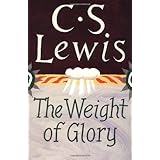
The Weight of Glory Review

The Weight of Glory
Average Reviews:

(More customer reviews)
Lewis's shorter works were generally originally composed as speeches or as articles for periodicals. Various sets of them were collected and published in book form both during his life and after his death. Trying to determine what works are in what collections is difficult - most works appear in more than one collection, some works appear under more than one title, and some collections appear under more than one title.
To aid readers, in this review I've listed the works in this collection, with notes indicating other collections they have appeared in.
Table of Contents:
"The Weight of Glory" (1), (2), (3), (4)
"Learning in War-Time" (1), (4), (5)
"Why I am Not a Pacifist" (4), (6), (7)
"Transposition" (1), (2), (3), (4)
"Is Theology Poetry?" (2), (3), (4)
"The Inner Ring" (1), (2), (3), (4)
"Membership" (1), (4), (5)
"On Forgiveness" (4), (5)
"A Slip of the Tongue" (2), (3), (4)
Notes:
(1) The original, 1949 version of this work included only these works. The other works were added in the 1980 edition. Also, the 1949 version was published in the U. K. under the title "Transposition and Other Addresses".
(2) also published in "They Asked for a Paper"
(3) also published in "Screwtape Proposes a Toast and Other Pieces"
(4) also published in "Essay Collection and Other Short Pieces"
(5) also published in "Fern-Seed and Elephants and Other Essays"
(6) also published in "Timeless at Heart: Essays on Theology"
(7) also published in "Compelling Reason"
Recommendations:
If you are interested in Lewis's shorter works, my best advice is to get "Essay Collection and Other Short Pieces", which, as of the time of this writing, is available from Amazon UK but not Amazon US. That collection consists of about 130 short works by Lewis. The works in that collection are mostly, but not exclusively, Christian.
If your interest in Lewis's shorter works is restricted to those on Christianity, and your budget or enthusiasm does not run to "Essay Collection and Other Short Pieces", then my second-best advice is to get any or all of the following (they don't overlap significantly, and between them they include most of Lewis's shorter Christian writings):
"God in the Dock - Essays on Theology and Ethics"*
"The World's Last Night and Other Essays"
"Christian Reflections"
"The Weight of Glory and Other Addresses"
* Be careful - there is a UK Fontana paperback lurking about called "God in the Dock - Essays on Theology" that is substantially shorter than the "God in the Dock - Essays on Theology and Ethics" collection. A full version of "God in the Dock - Essays on Theology and Ethics" was published in the UK under the title "Undeceptions - Essays on Theology and Ethics".

Click Here to see more reviews about: The Weight of Glory

Selected from sermons delivered by C. S. Lewis during World War II, these nine addresses offer guidance and inspiration in a time of great doubt.These are ardent and lucid sermons that provide a compassionate vision of Christianity.

Buy Now

Click here for more information about The Weight of Glory

Read More...

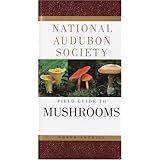
National Audubon Society Field Guide to North American Mushrooms (National Audubon Society Field Guides) Review

National Audubon Society Field Guide to North American Mushrooms (National Audubon Society Field Guides)
Average Reviews:

(More customer reviews)
This Field Guide is one of the best there is on the subject of mushrooms found in the North American continent. I hunt mushrooms regularly and use this guide when I encounter a mushroom that I am unfamiliar with or where there are simular features.
This guide has color photographs and an apt descriptions as to where and what a certain mushroom grows upon. Whether they are edible or not. I found this guide to be indispensable and keep it with me for accurate identification.
This guide is compact enough as to be with you on all hiking treks. It is worth the money as a very valuable tool for spore print color. Sometimes the only way to tell the difference between spieces.
Excellent and well worth reading. The best guide I found, but I own four others for cross reference. Before you harvest mushrooms from the wild you must be certain that what you harvest is what you've got.
Don't leave home without it. Be prepared...

Click Here to see more reviews about: National Audubon Society Field Guide to North American Mushrooms (National Audubon Society Field Guides)

With more than 700 mushrooms detailed with color photographs and descriptive text, this is the most comprehensive photographic field guide to the mushrooms of North America. The 762 full-color identification photographs show the mushrooms as they appear in natural habitats. Organized visually, the book groups all mushrooms by color and shape to make identification simple and accurate in the field, while the text account for each species includes a detailed physical description, information on edibility, season, habitat, range, look-alikes, alternative names, and facts on edible and poisonous species, uses, and folklore. A supplementary section on cooking and eating wild mushrooms, and illustrations identifying the parts of a mushroom, round out this essential guide.

Buy Now

Click here for more information about National Audubon Society Field Guide to North American Mushrooms (National Audubon Society Field Guides)

Read More...

On the Edge (The Edge, Book 1) Review

On the Edge (The Edge, Book 1)
Average Reviews:

(More customer reviews)

Many readers will be familiar with husband and wife writing duo Ilona Andrews through their very successful Kate Daniels series. (If you're not, I highly recommend them, but that's another review.) On the Edge is the start to an all-new series from the writing team, one that many readers might view as "something to fill the time while I wait for the next Kate Daniels book". This would be an erroneous view to take.
I picked up On the Edge knowing I was in for good writing, but I thought I'd be able to read a couple of chapters and then put it down to make dinner. As it turns out, the spouse was subjected to frozen pizza for dinner that night, because I could not put the book down. When I finally had no choice (work, what a pest!), I thought about it when I wasn't reading. I couldn't wait to pick it up again and get back to the characters and the world. From the moment Rose and her two young brothers, changeling Jack and necromancer George appear on the page, I'm completely hooked.
Some world building background: The Weird is a world that mirrors our own, but with magic instead of technology. For example, their Airforce flies wyverns, not jets - but they do have an Airforce. They even have special forces. Our world, called the Broken, has no magic at all, and if an Edger stays in it for too long, they'll lose what magic they have, permanently. Edgers like Rose and her family are mixed blood descendants of both the Weird and the Broken. Many of them have magic, but not enough to be welcome in the magical Weird, and too much to want to give it up and go live a "normal" life in our world, the Broken. (If they even could - many of the Edgers weren't born in the Broken, and therefore don't have things like birth certificates or social security cards.) They survive on the Edge, a strip of land between the Weird and the Broken, stealing electricity from across the Border and using Ward stones to keep out the worst of the dangerous creatures the Weird deposits in their Wood.
Rose and her two brothers, Jack and Georgie, are among the most powerful of the people on the Edge. In fact, bluebloods from the Weird have been showing up for years, trying to steal Rose away so she can pop out highly magical babies for them (power seems to be a big part of the pecking order in the Weird.) But Rose isn't having it. When Declan shows up, she tells him what she told all the others - no, I won't sleep with you, I won't marry you, go away. But Declan is different. He doesn't try to force his way past her Wards - he offers her a challenge. Give him three tasks, and if he can complete them, she will belong to him. If he fails, he'll leave the Edge and never return. Rose reluctantly agrees.
But coming up with tasks guaranteed to make Declan fail is soon the least of Rose's problems. Evil, terrible hounds have started showing up and trying to eat people, particularly magical people, which puts Rose, her brothers, and their paternal grandmother Éléonore at the top of the list. Together, Declan and Rose have to stop them, or soon there won't be any Edgers left.
As with the Kate Daniels books, the worldbuilding here is top notch. You gain a very clear understanding of what things mean and how they work without a lot of big infodumps of exposition. It's just woven seamlessly into the story, like Rose having to pack up the guns to drive to Wal-Mart. Rose is the primary POV character, so much of what is revealed comes through her eyes. But occasionally we switch to someone else - one of her brothers, her grandmother, one of the other residents. These are invaluable glimpses as well. I particularly enjoy the switches to George or Jack. Although they are 8 and 10 years old, Andrews doesn't "dumb down" for the kids. They are intelligent, normal kids with heartbreaking problems - George can't stop himself from raising things he cares about from the dead - puppies, birds, cats, his Grandfather - even though it's slowly killing him to keep them all animated. Jack is a changeling; he can change shape into a cat, and he's subject to the instincts and whims of how a cat would think.
I defy you not to fall head over heels in love with them!
Rose has the rarest gift of all, something that makes her so coveted, she has to deter "suitors" with a shotgun. With their mother dead and their father long gone, it's up to Rose and her grandmother to raise the boys and give them the best life they possibly can. Rose has sacrificed her own dreams in the process.
But don't worry. Declan wants to give her new ones - of him! Gorgeous, arrogant, and powerful, Declan could easily be a stereotypical alpha male character, but he's not. Just as 3-dimensional as Curran or Raphael (of the aforementioned Kate Daniels series), he has his own story to tell, and his own agenda beyond Rose. There's also the mysterious William, a man Rose meets in the Broken who wants to date her, and not for her power. Each of them have secrets that are dangerous and important to the Edge's survival - and Rose's.
I can't say much more about On the Edge without giving too much away. But the writing is fantastic, gripping, and it's hands down one of the best books I've read this year. I can't recommend it enough.


Click Here to see more reviews about: On the Edge (The Edge, Book 1)

The Broken is a place where people shop at Wal-Mart and magic is nothing more than a fairy tale. The Weird is a realm where blueblood aristocrats rule and the strength of your magic can change your destiny. Rose Drayton lives on the Edge, the place between both worlds. A perilous existence indeed, made even more so by a flood of magic-hungry creatures bent on absolute destruction.

Buy Now

Click here for more information about On the Edge (The Edge, Book 1)

Read More...

Skinwalker (Jane Yellowrock, Book 1) Review

Skinwalker (Jane Yellowrock, Book 1)
Average Reviews:

(More customer reviews)
If Mercy Thompson and Kate Daniels are some of your favorite heroines, then you don't want to miss out on Faith Hunter's new character, Jane Yellowrock. Jane is a vampire-hunter and skinwalker. But she's much more interesting than Anita Blake, and she's a different kind of walker than Mercy Thompson.
Jane hunts and kills rogue vampires for a living. The only thing she knows about vampires are wrapped up in the ones that go crazy and need to be put down. She's also a skinwalker. Missing pieces of her memories as a young child, all she knows is that she shares her body with Beast, the mountain lion she shifts to when on the hunt. As a skinwalker she can take on other animal forms, but she has a very close tie with Beast. They both have their own memories, thoughts, and will - which makes her a very interesting character indeed.
Jane is called to New Orleans by Katie, an old vampire, who hires her to track and kill the rogue vampire preying on not only the humans in the city but other vampires as well. Turns out this rogue vampire is a lot more older, more powerful, and much more harder to track than Jane thought. While on the hunt, she's also introduced to the vampire world: their lifestyle, politics, and the who's who of vamp society.
Trying not to give all the great stuff away in the review, I will tell you this: there are some really great storylines here. One, the vampire rogue is more than he appears to be. Two, the missing pieces of memory from Jane's childhood return, which answers all her questions about her heritage, her clan, and just how she and Beast became one. And three, all the characters in the novel have great potential.
As an introductory novel, Faith Hunter laid down some solid foundation. Jane is a great character and Hunter makes her interesting enough for readers to want to know more about her past and where she's heading. The details into the vampire world are easy enough to understand, I didn't feel boggled down with some complex history or feel the need to have to memorize names or dates for later novels. All the secondary characters were just as intersting as Jane and Beast themselves, that I just have to know what happens to them and hope to see them in the next Jane Yellowrock story. Skinwalker is written smoothly and rich in detail and story. Kim Harrison calls Hunter, " A new, strongly unique voice in the dark fantasy genre", and that alone is enough in my book!

Click Here to see more reviews about: Skinwalker (Jane Yellowrock, Book 1)

First in a brand new series from the author of the Rogue Mage novelsJane Yellowrock is a supernatural skinwalker--one sharing her body with the soul of a mountain lion. When the rogue-vampire hunter is hired to hunt down a particularly nasty vamp, Jane is drawn into the steamy New Orleans vampire society where she learns the ins-and-outs of the "sane" vampire culture, more about her own Cherokee heritage, and we are drawn into a rousing, fast-paced thriller.

Buy Now

Click here for more information about Skinwalker (Jane Yellowrock, Book 1)

Read More...