Showing posts with label gender. Show all posts

The Last Time I Wore A Dress Review

The Last Time I Wore A Dress
Average Reviews:

(More customer reviews)
Daphne Scholinski wore the label of "inappropriate female" for much of her life. As a tomboy youth, she was often mistaken for male. On one grocery trip, a clerk caught the "boy" for using the women's restroom. When the clerk confronted Daphne's father, instead of correcting the clerk, her weary father slapped her hand: "Bad boy. I told you to stop doing that."
In 1981, at odds with her raging father and abandoned by her free-thinking mother, 15-year-old Daphne was committed to a psychiatric hospital, at which a treatment plan was designed to help her identify as a "sexual female." Over one million dollars (you read that right) of insurance money was spent on three years of make-up lessons, encouragement of flirtation with males, and points for hugging male staff members. Daphne was indirectly blamed for all her family's troubles and told that her depression and confusion were symptoms of her improper gender identification. Desperate for a mothering relationship, she latched onto nurses, begging to be adopted by the most compassionate one, and attempting suicide when her efforts were rebuffed.
In a series of institutions, Daphne busied herself working the system to earn more privileges. To entertain themselves, she and other patients competed to shock the staff and get unusual diagnoses added to their charts. Their every movement was already analyzed and reduced into psychobabble, so why not? Daphne often embellished alcohol and drug abuse to make her case more interesting, but she realized she was out her league when she was transferred to rehab. All the while, a host of therapists and staff failed to identify sexual assault in Daphne's life, both before and *after* entering treatment. At age 18, when Daphne's father's insurance money ran out, she was discharged as no more "appropriate" a female than when she entered, but without a traditional high school experience or preparation for the world, and a few more years of victimhood under her belt.
Daphne Scholinski survived institutionalization with her intelligence, sense of humor, and sassy rebellious spirit. Every time she was transferred, she felt hope few her new situation. She writes that she knows she was lucky to be middle-class and be offered treatment, instead of being kicked onto the streets. As an adult, Daphne channeled her traumatic past into an artistic career, and now lives as Dylan Scholinski in the San Francisco area (Dylan's identification as male occurred after the 1997 publication of this memoir). I only discovered Scholinski's gender identity when I started composing my review, and in many ways, Daphne's "actual" gender identity is irrelevant to this story of the failure of the mental health system to help a depressed youth and her family.

Click Here to see more reviews about: The Last Time I Wore A Dress

At 15, Daphne Scholinski was committed to a mental institution and awarded the dubious diagnosis of "Gender Identity Disorder". "The voice of Daphne's teenage self--bewildered, frank, aching, and defiant--is so vivid it's like hearing a confidence whispered across a dormitory room deep in the night".--"Harper's Bazaar".

Buy Now

Click here for more information about The Last Time I Wore A Dress

Read More...

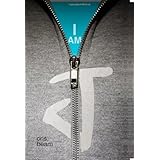
I Am J Review

I Am J
Average Reviews:

(More customer reviews)
I was a little scared of this book. I knew that Beam had it in her to realistically portray the transgender experience, so my expectations were super high. I also knew that a book like this has the potential to be filled with well-meaning stereotypes in order to present the most inclusive picture: of trans folk, of Puerto Rican New Yorkers, of the dream of being a "real boy," and more. But my fears were unfounded; I loved this book. J really rang true to me as a character and as a transguy, and his experiences, though not universal (thankfully not everyone has to move out or change schools in order to transition, though some undoubtedly do), were realistic. I Am J was everything I hoped it would be.
But I did have a couple of problems. I found it hard to believe that J, who has been looking around on the internet for information and support since he was eleven, hadn't heard about T (testosterone injections) or a (chest) binder until he was seventeen. I'm willing to let that go as it allows the reader to learn about these things at the same time that J does. I don't think it would have been such a problem if the book wasn't so obviously written by someone who, like J's support group leader, "talk[s] about the 'gender binary' and 'those of trans-masculine identification' as easily as reciting the alphabet" (243).* Beam is a very very knowledgeable woman, as evidenced by her previous work of non-fiction, Transparent: Love, Family, and Living the T with Transgender Teenagers. She seemed to have a difficult time balancing her wealth of knowledge with the naiveté of her narrator.This may look like more criticisms than praise, but it's really not! I loved I Am J, and I applaud Beam for taking on the issue of transitioning in the context of cultural and familial expectations, and the fallout from not meeting those expectations, in an accessible and authentic way. Not to mention that she wrote a pretty great story of a teen trying to find his direction and place in the world, regardless of all the issues that J has to deal with. I think this is a must buy for libraries serving youth; it's Luna for the guys.Book source: ARC provided by the publisher.
*Quotes and page numbers are from an uncorrected proof and may not match the published copy.


Click Here to see more reviews about: I Am J


Buy Now

Click here for more information about I Am J

Read More...

The Chalice and the Blade: Our History, Our Future Review

The Chalice and the Blade: Our History, Our Future
Average Reviews:

(More customer reviews)
The Chalice and the Blade describes idyllic, Goddess-worshipping societies that Eisler believes existed several thousand years ago in eastern Europe and the eastern Mediterranean. She presents images of agrarian villages that had no defensive fortifications because there was no war. The communities were non-violent and egalitarian. There was no hierarchy and no sexism. There was no class system or great disparities of wealth. The people were deeply spiritual and practiced free love. They were profoundly connected to the natural world. Eventually, however, aggressive warrior nomads from the east (patriarchal peoples who worshipped male sky gods) destroyed these peaceful, Goddess-worshipping communities. The warrior nomads killed the men, raped the women, and took the children as slaves. The Goddess was suppressed and the patriarchy has ruled ever since.
Reisler invites the reader to mourn the loss of ancient communities, and reconnect with their underlying values. I read the book as a refreshing, life-affirming counter-myth that challenges the abusive aspects of our patriarchal traditions. The Chalice and the Blade celebrates the value of partnership, equality, collaboration, non-violence, and connectedness to nature. Eisler gives us some sense of the enormous power to heal that resides in the repressed feminine and lunar realms. However, I would offer the following cautions:
1. It is possible that Eisler has extrapolated a few scraps of evidence into a highly idealized society that didn't really exist.
2 . It is possible that Eisler's vision is pyschologically naive in the sense that everything has a shadow or dark side. If the Goddess societies existed, they would, by necessity, have a dark side.
3. It is possible that the problem with western society is not that it has a male image of divinity but that it has a one-sided, gender-specific image of divinity. Substituting a Goddess-based image might not lead to Utopia, but might bring its own set of problems.Perhaps we need images of the divine that honor both genders.
4. Eisler is a nationally known advocate of partnership models as superior forms of human interaction in contrast to "dominator" approaches. Faced with the choice of partnership or domination, the former is clearly preferable. A more neutral way of distinguishing between these two approaches would be to substitute consensus for partnership and hierarchy for domination. It is possible that each approach - consensus and hierarchy - has its own merits and drawbacks. The negative shadow of consensus systems might be passive aggression, confusion, paralysis. It is possible that when grounded with love and respect, hierarchical systems can be generative and empowering.
I suspect that the humanity would best be served by a society that reveres both male and female, earth and sky, soul and spirit, hierarchy and collaboration, passion and gentleness - a social order with a pluralistic approach that reflects mythopoetic diversity and celebrates consciousness. Yet, whatever the book's shortcomings I must confess that my heart is with Eisler.

Click Here to see more reviews about: The Chalice and the Blade: Our History, Our Future


Buy Now

Click here for more information about The Chalice and the Blade: Our History, Our Future

Read More...

Love Is an Orientation: Elevating the Conversation with the Gay Community Review

Love Is an Orientation: Elevating the Conversation with the Gay Community
Average Reviews:

(More customer reviews)
In a world that increasingly welcomes and accepts those of the gay, lesbian, bisexual, and transsexual (GLBT) orientation, Christians must open their eyes and ears to what GLBT people are saying about God, the Scriptures, the church, and human sexuality. This is especially true if we want to minister among them.
Furthermore, the GLBT issue is increasingly being brought up on television and in politics. Numerous states are passing laws legalizing same-sex marriage. Therefore, it is vitally important for Christians to know how to respond to these situations, not only in truth, but also in love.
Andrew Marin is one Christian who is pioneering the way.
In his book, Andrew Marin provides an excellent overview of the absolute necessity for Christians to build bridges to those people who are in the GLBT community. As Christ took the initiative and came to us, we must take the initiative in building bridges of hope and love to others.
Thankfully, Andrew Marin is not writing theoretically, but from yeas of experience from living among the GLBT community as the "gayest straight person in the world."
The book provides excellent insights and guidelines for working alongside and developing relationships with people in the GLBT community. For example, Andrew advises the four of the most important things Christians can do are (1) love, (2) listen, (3) don't judge, and (4) seek friendship and conversation. Also, he recommends we stop saying "Love the sinner; hate the sin" and referring to those in the GLBT community as "homosexuals." Both, he explains, are derogatory.
One helpful feature of the book is the answers to the five main questions that are on the minds of most Christians. The questions are:
1. Do you think that gays and lesbians are born that way?
2. Do you think homosexuality is a sin?
3. Can a GLBT person change?
4. Do you think that someone can be gay and a Christian?
5. Are GLBT people going to hell?
I imagine that as you read this short review, one or two of these questions crossed your mind as well. I believe that Marin provided some excellent answers to these questions in his book. Sadly, I don't have room to reproduce the answers here...so I guess you'll just have to buy and read the book for yourself.


Click Here to see more reviews about: Love Is an Orientation: Elevating the Conversation with the Gay Community


Buy Now

Click here for more information about Love Is an Orientation: Elevating the Conversation with the Gay Community

Read More...

Annabel: A Novel Review

Annabel: A Novel
Average Reviews:

(More customer reviews)
Being born a hermaphrodite can be a very hard row to hoe. It is especially hard when you are born in remote Labrador in 1968. The nearest specialist is miles away and this is not a town that relishes diversity. Even today, in large urban areas, there is a lot of controversy about what to do about gender when an infant is born with ambiguous sex organs. Some doctors utilize blood tests to determine gender and others go by outward appearance. A true hermaphrodite is born one in 81,000 births.
When Jacinta and Treadway have a home birth, assisted by their friend Thomasina, they are shocked to see that their infant child has one testicle and a vagina. They immediately take the baby to the hospital where the doctor determines the child to be a boy. His sex is determined because his penis is large enough to call him a boy. He is named Wayne and brought up as a son. However, he has a full set of female sex organs within him and feels that he has a shadow female self that Thomasina calls Annabel. Lifelong medication shuts off the development of Wayne's female self and promotes his development as a male.
Wayne is not told that he is a hermaphrodite. He takes pills every day that he believes are for a blood disorder. His father, Treadway, tries to get Wayne to be `one of the guys' and keeps hoping Wayne will join in with other boys in their activities. However, Wayne is not like that. He likes to draw, is fascinated with bridges, and loves to sit and talk with his mother. Treadway is a trapper who is gone for most of the year and, as tension in the home builds due to Wayne's condition, he is gone more and more. It is Jacinta who is responsible for most of Wayne's rearing.
This debut novel is about Wayne's journey through life and is a treatise on gender, especially its fluidity and ambiguity. Though Wayne lives his life as a boy he is always wrestling with the feeling that there is something else there, something in him that is different from other people. Thomasina knows his secret and it is she who rushes him to the hospital when he is going through puberty because his abdomen is filled with menstrual blood. She decides that it is important for Wayne to know about himself and she breaks the silence, informing him about his uniqueness.
Wayne struggles throughout his adolescent years and finally decides to stop taking all his pills to see what his `real' body and self are like. He is met with varied responses, some accepting and some filled with hatred. He goes in for surgery to have the original surgery reversed. (When he was an infant, his vagina was sewn shut). Now he can experience the world as both male and female.
The reader lives with Wayne throughout his life until his twenties. We yearn, with him, to know more about who he truly is and how he can fit into the world. He has one dear friend from childhood, a girl named Wallis and we are with him as he yearns for her with a physical and emotional longing that is not sexual.
Kathleen Winter has written a very interesting novel about a fascinating subject. However, there is something missing in the characterizations. We never get to know what makes Treadway and Jacinta tick. They go through tremendous changes but it is as through they are left midway in their struggles and the reader is waiting for some completion, some finality in their lives. Thomasina is very well done and she is, in many ways, the star of this book. She is willing to take risks for Wayne and she is the first person to give him a girl's name - Annabel. The novel, at 461 pages is very long and would have benefited from editing that made it tighter.
I commend the author for taking on this topic. She does it sensitively and there are parts of the novel that flow beautifully with a ring of magical realism to it. Wayne is a beautiful spirit searching for himself. We root for him as he tries to overcome a life that is that is filled with secrets and lies.

Click Here to see more reviews about: Annabel: A Novel


Buy Now

Click here for more information about Annabel: A Novel

Read More...