Showing posts with label design. Show all posts

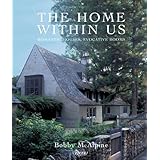
The Home Within Us: Romantic Houses, Evocative Rooms Review

The Home Within Us: Romantic Houses, Evocative Rooms
Average Reviews:

(More customer reviews)
This book gives a lovely glimpse of the select output from architect Bobby McAlpine and his firms. His body of work is more akin to a talent and style not seen since the early last century with architects like Harrie Thomas Lindeberg or Mellor, Meigs & Howe. These are gracious, intricate, lovely and very inviting structures inside and out.
He's been served well by clients who must have the resources to build such structures and more importantly appreciate the stately old world feel. Not a hint of McMansion or chest-thumping loud architecture that so many homes of today sadly exude. McAlpine could design and build a dog house and I suspect it would be more visually inviting then most homes, even those of the 'well heeled', built in the last 50-years.
A comparable contemporary firm would be Fairfax & Sammons, who also have had a book issued in the last decade on their output. If you have that publication you'll certainly appreciate this one.
Some publications such as Southern Accents and Veranda have showcased his work (he's been based in Alabama) but otherwise he's not receiving the widespread accolades he deserves. Perhaps this book will change that. 'The Home Within Us' is not without some quirks - no detail accompanies the homes shown so no idea when they were built or even where they stand. Some of the pictures appear to have been sourced from prior photo shoots so sometimes the pictures themselves look dated. And perhaps a good thing as it reflects well on what he's accomplished I was hungry to see even more exterior and facade detail shots.

Click Here to see more reviews about: The Home Within Us: Romantic Houses, Evocative Rooms


Architect and designer Bobby McAlpine creates idyllic houses that wed historical precedent with gracious modern living. His distinguished firms, McAlpine Tankersley Architecture and McAlpine Booth & Ferrier Interiors, are renowned nationwide for their talent in designing residences that resonate with nostalgia, fantasy, and a sense of place. Their dwellings—from country and seaside retreats to homes in historic American neighborhoods—offer favorite period styles with a timeless quality. Presented are over twenty houses in a variety of settings that illustrate concepts running throughout their work. Juxtaposing intimate spaces with lofty entertaining areas and combining unexpected materials, such as stone with thatch, are among the hallmarks of these prestigious firms. Examples include a Mediterranean-revival house with sleek factory-sash windows and classical Roman columns, a beach house with a vaulted hallway leading to a light-filled contemporary salon, and an unusual house that blends Scottish vernacular style with modern details. With lush photography capturing the romance of these houses, The Home Within Us is ideal for anyone wishing to be inspired by the poetic design of a romantic home.


Buy Now

Click here for more information about The Home Within Us: Romantic Houses, Evocative Rooms

Read More...

Whatever You Think, Think the Opposite Review

Whatever You Think, Think the Opposite
Average Reviews:

(More customer reviews)
Arden's second book, like his first, is a zen take on your life in business. He does not tell you what to think as much as he tells you want he thinks and then challenges you to react, to think, to imagine. Great story on steady eddie v. reckless erica and how playing it safe is the least safe thing to do. Forces you to wonder which you are. His advice is anything but typical. To creative types he says don't worry about the medium you want , focus on the money you'll make---"it's honest." The juxtaposing of ideas with art and photos is well done---I liked the ask for a slap in the face advice(ask others to tell you what you did wrong, not what you did right) with the photo of a woman wincing at the slap to come. Why not 5 stars? If I read him right, it'd be an insult.

Click Here to see more reviews about: Whatever You Think, Think the Opposite


Buy Now

Click here for more information about Whatever You Think, Think the Opposite

Read More...

Programming Pearls (2nd Edition) Review

Programming Pearls (2nd Edition)
Average Reviews:

(More customer reviews)
The thirteen columns in this book appeared in the Communications of the ACM between 1983 and 1985. There can't be more than a couple of technical books on computing from that era that are still worth reading. Kernighan & Ritchie's book, "The C Programming Language", is one that springs to mind; this book is definitely another, and will probably outlast K&R as it has almost no ties to existing or past hardware or languages.
What Bentley does in each of these columns is take some part of the field of programming--something that every one of us will have run into at some point in our work--and dig underneath it to reveal the part of the problem that is permanent; that doesn't change from language to language. The first two parts cover problem definition, algorithms, data structures, program verification, and efficiency (performance, code tuning, space tuning); the third part applies the lessons to example pseudocode, looking at sorting, searching, heaps, and an example spellchecker.
Bentley writes clearly and enthusiastically, and the columns are a pleasure to read. But the reason so many people love this book is not for the style, it's for the substance--you can't read this book and not come away a better programmer. Inefficiency, clumsiness, inelegance and obscurity will offend you just a little more after you've read it.
It's hard to pick a favourite piece, but here's one nice example from the algorithm design column that shows how little the speed of your Pentium matters if you don't know what you're doing. Bentley presents a particular problem (the details don't matter) and multiple different ways to solve it, calculating the relationship between problem size and run time for each algorithm. He gives, among others, a cubic algorithm (run time equal to a constant, C, times the cube of the problem size, N--i.e. t ~ CN^3), and a linear algorithm with constant K (t ~ KN). He then implemented them both: the former in fine-tuned FORTRAN on a Cray-1 supercomputer; the latter in BASIC on a Radio Shack TRS-80. The constant factors were as different as they could be, but with increasing problem size the TRS-80 eventually has to catch up--and it does. He gives a table showing the results: for a problem size of 1000, the Cray takes three seconds to the TRS-80's 20 seconds; but for a problem size of 1,000,000, the TRS-80 takes five and a half hours, whereas the Cray would take 95 years.
The book is informative, entertaining, and will painlessly make you a better programmer. What more can you ask?

Click Here to see more reviews about: Programming Pearls (2nd Edition)

"The first edition of Programming Pearls was one of the most influential books I read early in my career, and many of the insights I first encountered in that book stayed with me long after I read it. Jon has done a wonderful job of updating the material. I am very impressed at how fresh the new examples seem." --Steve McConnellWhen programmers list their favorite books, Jon Bentley's collection of programming pearls is commonly included among the classics. Just as natural pearls grow from grains of sand that irritate oysters, programming pearls have grown from real problems that have irritated real programmers. With origins beyond solid engineering, in the realm of insight and creativity, Bentley's pearls offer unique and clever solutions to those nagging problems. Illustrated by programs designed as much for fun as for instruction, the book is filled with lucid and witty descriptions of practical programming techniques and fundamental design principles. It is not at all surprising that Programming Pearls has been so highly valued by programmers at every level of experience.In this revision, the first in 14 years, Bentley has substantially updated his essays to reflect current programming methods and environments.In addition, there are three new essays on/ testing, debugging, and timing/ set representations / string problems All the original programs have been rewritten, and an equal amount of new code has been generated. Implementations of all the programs, in C or C++, are now available on the Web.What remains the same in this new edition is Bentley's focus on the hard core of programming problems and his delivery of workable solutions to those problems. Whether you are new to Bentley's classic or are revisiting his work for some fresh insight, the book is sure to make your own list of favorites. 0201657880B04062001

Buy Now

Click here for more information about Programming Pearls (2nd Edition)

Read More...

The Mammoth Book of Tattoos Review

The Mammoth Book of Tattoos
Average Reviews:

(More customer reviews)
I usually don't like 'flash tattoo' books of any sort. Unless it's a very genre specific book with very high quality photos like
Bushido : Legacies of the Japanese Tattoo by Takahiro Kitamura.
Mammoth Tattoos is not a collection for the 'I must get this tattoo for my next inking' folks... Leave that for the flash books and various tattoo magazines out there.
Unlike all those though--The Mammoth Book Of Tattoos had me floored as I had never before seen such a staggeringly fresh and inspirational collection of art on almost every page. And certainly every genre. Each artist and their art represented by very high quality photos. I had to pick what I didn't like and came up with three out of the 80 artists represented.
This really is a fascinating (coffee-table/reference)book for anyone who appreciates graphic design, classic and modern and yes art which only happens to be on an epidermal canvas.

Click Here to see more reviews about: The Mammoth Book of Tattoos

This collection covers all styles of tattoos from bold tribal pieces, Chines characters, and hieroglyphs to delicate air-brushed designs. Included are striking images of tattoos ranging from all-over "body suits" to individual motifs.

Buy Now

Click here for more information about The Mammoth Book of Tattoos

Read More...

Pattern Magic Review

Pattern Magic
Average Reviews:

(More customer reviews)
It has been a long time since I have found a pattern making book that I have found as exciting as this book.
Once you get beyond the basics of creating patterns that fit, commonly called slopers, what do you do with them? Most designs I see on the street, in catalogs, and in the stores are so easy to execute that the design process is not challenging at all.
But there are a few designs that have me scratching my head thinking "How did they do that?" I have taken to calling them "Pattern Puzzles." This book is full of these designs. Each one is uniquely different but beautifully illustrated and explained in anywhere from one to three page spreads. Tomoko never takes more than three pages of illustrations to show how to make even the most complex and unusual design from a fitted sloper.
I am pleased to see her using the front bodice sloper for women that I now use in my online patternmaking classes. It has one dart for the bust to the waist and one to the armscye (arm hole). In my experience this configuration for the darts provides the optimum way of achieving an accurate custom fit. I also believe it is the best sloper for visualizing how to create the lines of original designs so you can convert from a two dimensional form to a three dimensional one.
She uses a technique for evaluating pattern shapes that I have found invaluable in my teaching which is to prototype design ideas in paper so you can assemble the shape before you even touch needle and thread.
Tomoko also shares another passion of mine for developing design ideas using dress forms in scale. All the photos in this book are of the designs on a half scale manikin.
Caveat #1: These designs are unusual. If you are looking for the conventional, this is not for you. But if you step beyond "I wouldn't want to wear that" and move on to "What can I learn from this pattern design technique," I believe you will increase your pattern design skills exponentially.
Caveat #2: There are no sewing instructions. I would recommend when you try these ideas out you do what Tomoko does and try them in scale first. If you don't have a scale dress form, fashion dolls such as the ones Tomoko works with are an excellent medium to experiment with.
Bravo Tomoko--I can hardly wait until your volume 2 is translated into English. Although your illustrations are so clear, I am almost tempted to get the Japanese edition.
Don McCunn
Author of How to Make Sewing Patterns

Click Here to see more reviews about: Pattern Magic

Pattern Magic is the cult pattern-making book from Japan. Taking inspiration from nature, from geometricshapes, and from the street, this book harnesses the sheer joy of making and sculpting clothes. The book takes a creative approach to pattern making, with step-by- step projects for fashion designers and dressmakers to enjoy. Each project is beautifully illustrated with clear diagrams and photographs showing the stages of construction, the muslins, and the finished garments.

Buy Now

Click here for more information about Pattern Magic

Read More...

Digital Foundations: Intro to Media Design with the Adobe Creative Suite Review

Digital Foundations: Intro to Media Design with the Adobe Creative Suite
Average Reviews:

(More customer reviews)
Really solid merger of Bauhaus Foundations and practical applications. The episodic portions of art and computational history create a fine narrative arc, and marry the two genres together well. I'm trying to get my college to adopt it in some of our 1st and 2nd-year classes.
Patrick Lichty, Assiatand Professor
Interactive Arts & Media, Columbia College Chicago

Click Here to see more reviews about: Digital Foundations: Intro to Media Design with the Adobe Creative Suite

Fuses design fundamentals and software training into one cohesive book!
The only book to teach Bauhaus design principles alongside basic digital tools of Adobe's Creative Suite, including the recently released Adobe CS4
Addresses the growing trend of compressing design fundamentals and design software into the same course in universities and design trade schools.
Lessons are timed to be used in 50-minute class sessions.


Buy Now

Click here for more information about Digital Foundations: Intro to Media Design with the Adobe Creative Suite

Read More...

Facebook Cookbook: Building Applications to Grow Your Facebook Empire Review

Facebook Cookbook: Building Applications to Grow Your Facebook Empire
Average Reviews:

(More customer reviews)
This tutorial is for developers with a broad but not necessarily deep background in web development who are interested in building Facebook web applications. Although Facebook Desktop and Mobile apps are covered where applicable, the content of this book is about straight web applications. Material covered includes how to plan an app, API details and FQL calls, and how to market and attract users, so there should be something for all participants in Facebook app development.
The author assumes you already know your way around web development in the areas of HTML, CSS, PHP programming, and SQL/database design. You don't need to be an expert with any of them, and the author makes suggestions on good books on all of the supporting technologies. The following is the detailed table of contents for the book, which is currently not included in the product description:
Chapter 1. Introducing Facebook Platform - A general overview of Facebook, Facebook Platform, and an introduction to the opportunity it represents.
Chapter 2. Ideation and Strategy - If you don't have an idea in mind already for an app, this chapter helps you out by giving you some ideas for some applications that you can extend. Shows techniques for doing app design quickly and with the best possible results.
Chapter 3. Hello World - Walks you through the classic Hello World first programming example.
Chapter 4. Architecture and Design - Covers the best architectures for Facebook apps, provides some recommendations for database performance, and produces an overview of the design and user experience of some winning applications.
Chapter 5. Setting Up Your Environment - Learn about all the things you need to download in order to get started. Learn how to add apps to Facebook, how to set up a test account, and how to get information on the latest changes to Facebook.
Chapter 6. Facebook Markup Language (FBML) - FBML is the glue that holds the Facebook Platform together. Covers all of the tags, discusses some odd behaviors you might encounter, and explores some great tricks for building better frontends.
Chapter 7. Facebook JavaScript (FBJS) - This chapter explains why you can't just use regular JavaScript in your app, how to build great Ajax-like interactions using Facebook's Mock Ajax techniques, and goes into detail about all of the useful functions available to you.
Chapter 8. Facebook Query Language (FQL) - As FBML is to HTML, FQL is to SQL. This chapter examines the schema of the various database tables to which you have access, and catalogs some really useful FQL queries you can use in your apps.
Chapter 9. Facebook API - Digs deep into the code of the API that connects everything together. The chapter goes through each of the objects and methods you have at your disposal, and gives you some tips and tricks for desktop apps. The chapter covers the API using the official Facebook PHP Client, but it shouldn't be too hard to convert these examples into your language of choice.
Chapter 10. Marketing Your App - Supplies some general marketing options for Facebook applications and some techniques for measuring your success at attracting people to your app.
You should be able to use the book either by reading cover to cover or by skipping around in it. It is well-illustrated and the code is well commented. Highly recommended. Also recommended for those just starting out is FBML Essentials, since a good understanding of FBML is essential for success.

Click Here to see more reviews about: Facebook Cookbook: Building Applications to Grow Your Facebook Empire


Want to build Facebook applications that truly stand out among the thousands already available? In addition to providing easy-to-follow recipes that offer practical ways to design and build scalable applications using the Facebook Platform and its new profile design, this Cookbook also explains proven strategies for attracting users in this highly competitive environment. With plenty of examples and practical solutions, Facebook Cookbook answers some of the hardest questions Facebook application developers contend with -- including how and where to get started. This Cookbook will help you:

Learn to build an application that scales to accommodate a sudden influx of users
Explore changes from Facebook's old profile design to the new look and feel
Take advantage of new integration points in the new profile design
Get tips for designing applications with hosting and deployment costs in mind
Discover which widgets and controls to use for building the most attractive user interface design
Learn the differences between standard HTML, JavaScript, and SQL, and the versions used on the Facebook Platform
Target large, defined groups on Facebook, including those who want to find jobs, hire employees, market a business, advertise, and more

If you can build simple web applications with HTML, Facebook Cookbook will help you build applications with the potential to reach millions of users around the globe. Learn what it takes to design applications that stand above the rest.


Buy Now

Click here for more information about Facebook Cookbook: Building Applications to Grow Your Facebook Empire

Read More...

MediaWiki Skins Design: Designing attractive skins and templates for your MediaWiki site Review

MediaWiki Skins Design: Designing attractive skins and templates for your MediaWiki site
Average Reviews:

(More customer reviews)
I wish I had this book when I first set out to design a MediaWiki skin for my own wiki. It would have saved me so much time and trouble. Nothing like this existed to my knowledge when I set out to make my skins. Documentation is often the weakest link in the open source community. This book fills an important gap that should democratize MediaWiki even more, making it more appealing to a wider swath of the web population.
The book follows my favorite format for a technical guide, taking the reader step by step through an example that resembles the kind of thing you'd want to do in real life. It breaks down everything thoroughly with plenty of pictures. Topics covered include not only CSS but also MediaWiki PHP functions that are integrated into a MediaWiki skin. As a bonus, there is information on adding on some of the latest widgets that Web 2.0 has to offer, from thickbox to twitter. To make your skin a real professional class act, you can even learn exactly how to use licensing and copyright options and exactly how to make your skin printer friendly. If you're going to be spending any time messing with MediaWiki skin design, and you're like me and don't have time to spend hours spinning your wheels, do yourself a favor and get a copy of this book.

Click Here to see more reviews about: MediaWiki Skins Design: Designing attractive skins and templates for your MediaWiki site

This book will show the reader how to customize the appearance of their MediaWiki site by creating custom skins. This book is aimed at web designers or wiki administrators who want to customize the look of MediaWiki with custom skins. The reader will already have a MediaWiki installation that they are targeting with their skin. It might be their own installation, or they might be a designer developing a custom look for a client. The book does not cover setting up or using MediaWiki, except features specifically related to skinning. The book assumes that you are familiar with CSS and HTML, but no prior knowledge of PHP is required.

Buy Now

Click here for more information about MediaWiki Skins Design: Designing attractive skins and templates for your MediaWiki site

Read More...